Review: Sunset Lodge in Georgetown: The Story of a Madam
#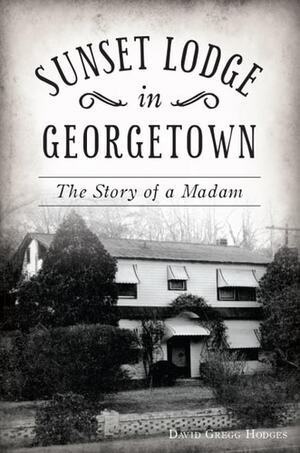
Finished reading: Sunset Lodge in Georgetown: The Story of a Madam by David Gregg Hodges 📚 Purchased at the Rice Museum gift shop in Georgetown, SC.
A fun book of local history by South Carolina native Hodges that is actually three smaller booklets jostling uncomfortably alongside each other.
The first – and best – booklet is the history of the Sunset Lodge brothel that operated three miles south of Georgetown, SC, from 1936 to 1969. The madam, Hazel Weisse, operated her business with ironclad rules for her “sporting ladies” and an equally disciplined relationship with the local community. She was always careful to never rub the town’s nose in the Lodge’s business, she contributed large amounts of money to local charities and the local economy, she cultivated relationships with local law enforcement and rich protectors, and so the community largely turned a blind eye to her brothel. Even while the sheriffs shut down other brothels, hers remained in business from the Roosevelt to the Nixon administrations.
Hodges, an amateur historian, also provides an excellent, compact history of the Georgetown County region from pre-Civil War days to the ’70s, and a glimpse at the industry of prostitution that dotted the Atlantic coast’s harbors and military bases.
A short chapter on Hazel Weisse’s life, from her early years in Chicago to managing a brothel in South Carolina, is necessarily sketchy. She protected her past as carefully as she did her reputation, and Hodges doggedly found and reported every scrap of documentary info he could find. But Weisse remained an essentially unknowable character and hovers over the narrative rather than dominates it; despite the book’s subtitle, Sunset Lodge in Georgetown: The Story of a Madam is not a story of her life. Rather, Hodges can report only the externals of her life and the stories of those who remembered her. She remains a tantalizingly unknowable presence. So the book instead becomes more a remembrance of Sunset Lodge and the stories that grew from it.
The second booklet – which takes up most of Sunset Lodge in Georgetown – is a storytelling project where Hodges reproduces in smoothed-out one- to three-page narratives some of the interviews he conducted with people who visited the Lodge, worked there, did business with Weisse, or otherwise had stories to tell about this legendary place and its inhabitants.
These are odd little narratives. Their titles reflect job roles – “IRS Agent,” “Deputy Sheriff,” “Minister,” “Cab Company Owner” – or stories of experiences – “Father and Son,” “First Time,” “Christmas Eve.”
Hodges states in his introduction that he anonymized the interviews and often combined some stories into a single narrative; sometimes, all he had was a punchline and then he worked backward to create a suitable narrative lead-in. If that’s the case, was this a story worth telling? I could never be sure how much of what I was reading was actual experience versus a useful fiction needed to fill in a story’s gaps.
The bulk of the book is taken up by these stories and reading them feels … odd. There’s little of the satisfying detail of corroborated history, but there are flashes of everyday life in Georgetown, of remembered history, that show how the locals accommodated the house: a little girl who stares wide-eyed at the sporting ladies entering the doctor’s office for their weekly check-up while her mother stiffens with outrage, the dress shop owner who carries the latest fashions to outfit the working girls, the postal worker who knows to mail packages sent by the girls to their families in plain brown wrapping, the sheriff who shuts down the clergymen gathered in his office to demand the house be closed.
But then there are other stories that limp to the finish line, or barely have anything to do with the Lodge or Weisse, and carry zero emotional weight. Or there are stories with the well-rounded shape of oft-told jokes or anecdotes that could be said about any whorehouse.
The lighthearted tone of this grab bag of stories jostles uncomfortably alongside the third booklet: Hodges’ mixed feelings about taking on the Sunset Lodge as a history project.
Hodges describes his own history of stumbling across the Lodge, and the fun he had doing the detective work of consulting newspapers and census records to corroborate facts. He especially enjoyed being a guest speaker at community clubs, where afterward people would tell him stories about the Lodge or put him on the trail of other people to interview.
But he’s also ashamed of enjoying himself a little too much and of the attention his topic brought him. As a conservative man and an elder in his church, Hodges makes it clear in several places he considered Weisse’s operation immoral and wrong. How many families, he asks, how many marriages were damaged because the menfolk frequented the Sunset Lodge? Fair enough. Only a few stories really push against the “good, clean, dirty fun” aspect of the Lodge legend: one where a father pays for his son’s first sexual experience, another where a group of high school girls joy-ride through the Lodge’s driveway and one of the girls recognizes her father’s car.
The last sentences of his book, after acknowledging Weisse’s business prowess: “It is not an excuse to do well that which should not be done at all. Perhaps other houses of prostitution will find it impossible to stay in business if local laws are vigorously enforced.”
Wow. After spending a whole book practically reveling in stories about the Lodge and documenting the light that sex work, and proximity to sex work, throws on human behavior, and considering how much he enjoyed talking to groups about and researching the Lodge (still giving pleasure long after its demise!), collapsing all that emotion and legend and history into a grim middle-class “crime shouldn’t pay” bumper sticker pops the balloon. It does Hodges’ work a real disservice.