
When I teach literature I always tell them, these would-be writers (we don’t do workshops, we just read great books), I say, “When you read Pride and Prejudice, don’t if you’re a girl identify with Elizabeth Bennet, if you’re a boy with Darcy. Identify with the author, not with the characters.” All good readers do that automatically, but I think it’s helpful to make that clear. Your affinity is not with the characters, always with the writer.
You should always be asking yourself, if you want to become an expert reader or perhaps a writer, you should always say, “How is this being achieved?” “How is this scene being managed?” “How is this being brought off?” Because the characters are artifacts. They’re not real people with real destinies and I know that feeling, when you’re reading Pride and Prejudice even for the fourth time, you feel definite anxiety about whether they’re going to get married, even though you know perfectly well that they do. There’s a slight sort of, “Come on, kiss her!”
MARTIN AMIS
You most likely need a thesaurus, a rudimentary grammar book, and a grip on reality. This latter means: there’s no free lunch. Writing is work. It’s also gambling. You don’t get a pension plan. Other people can help you a bit, but essentially you’re on your own. Nobody is making you do this: you chose it, so don’t whine.
MARGARET ATWOOD
Character is the very life of fiction. Setting exists so that the character has someplace to stand. Plot exists so the character can discover what he is really like, forcing the character to choice and action. And theme exists only to make the character stand up and be somebody.
JOHN GARDNER
You can’t wait to write until you’re in the mood. My God, if you waited until you were in the mood, it would take forever. You have to sit down. The name of the game is to put it in the chair.
HARRY CREWS

Read voraciously, many books at a time. Only then will you hear the conversation taking place among them.
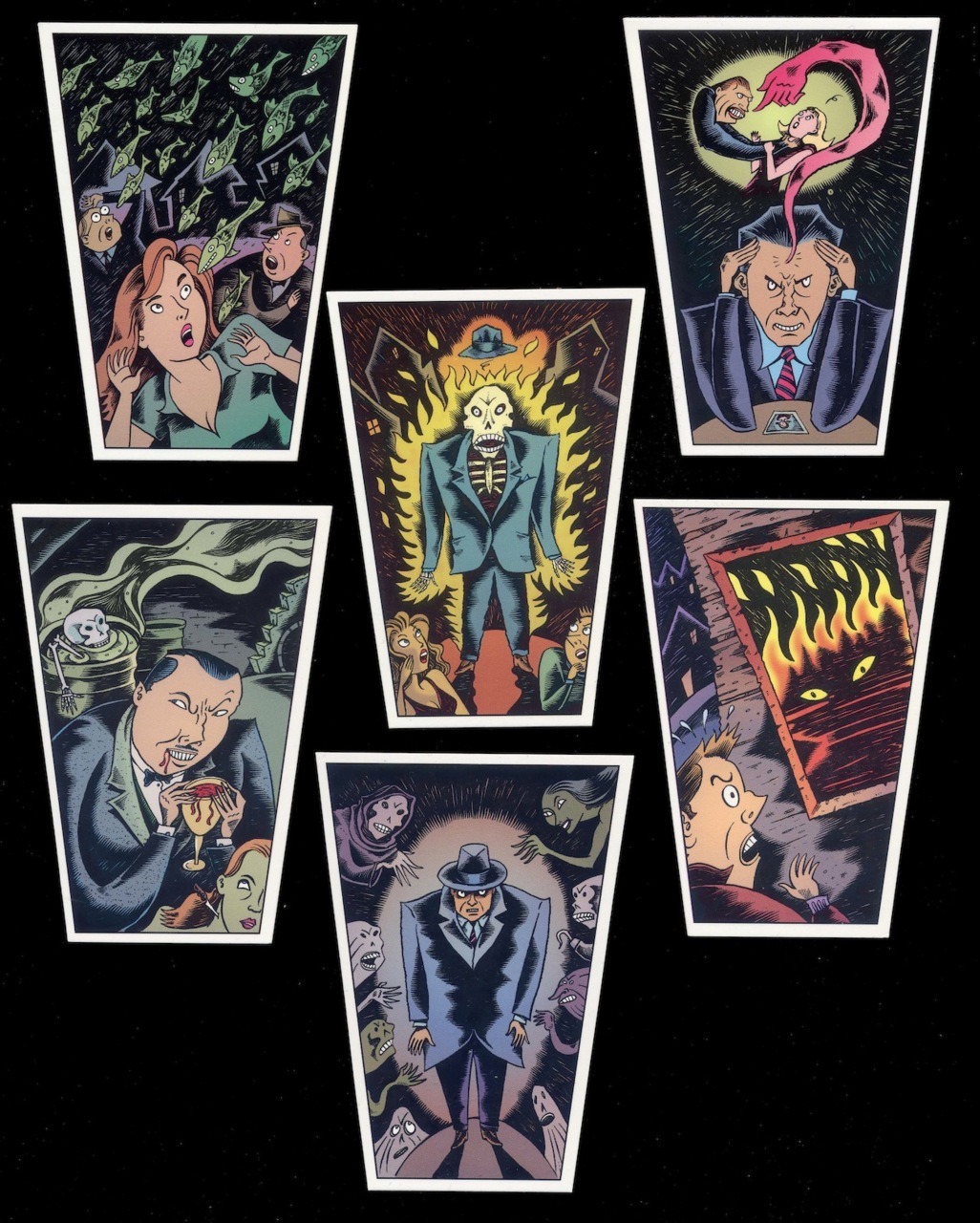
From the RIP card set of strange phenomena ~ (1) Rain of fish (2) Psychic detective (3) Spontaneous combustion (4) Real life vampire (5) Fire ghost (6) Ghost hunter

Something Should Remain Unsaid
Narrative art must be clear, but it must also be mysterious. Something should remain unsaid, something just beyond our understanding, a secret. If it’s only clear, it’s kitsch; if it’s only mysterious (a much easier path), it’s condescending and pretentious and soon monotonous.
STEPHEN SONDHEIM
Something Should Remain Unsaid