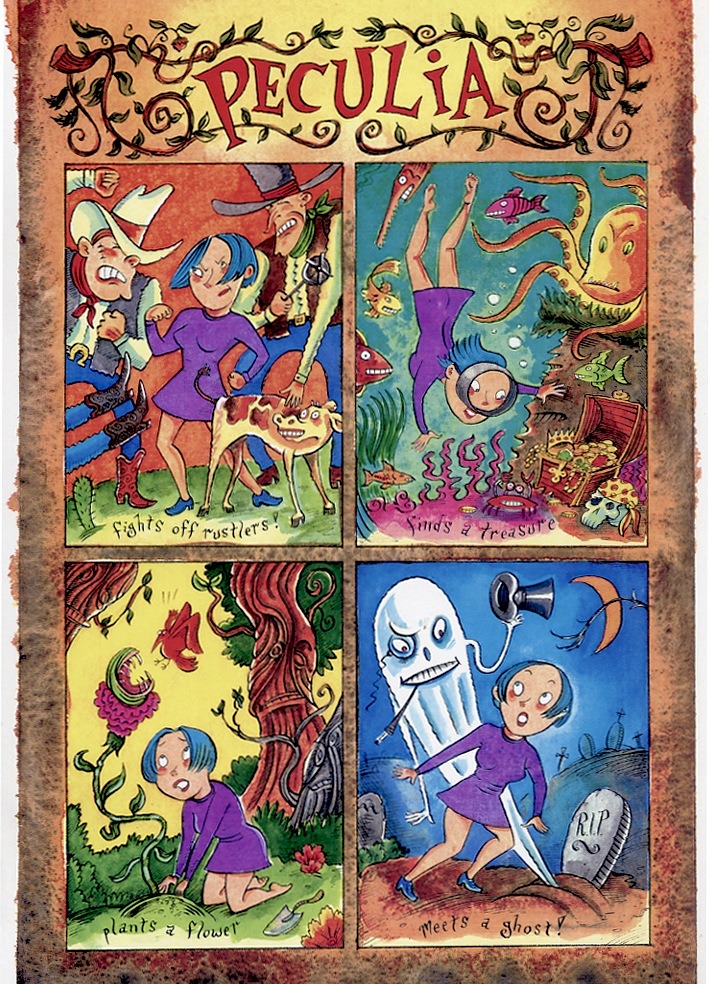

PANIQUE Board Game - Black & White Line Art
Read voraciously, many books at a time. Only then will you hear the conversation taking place among them.
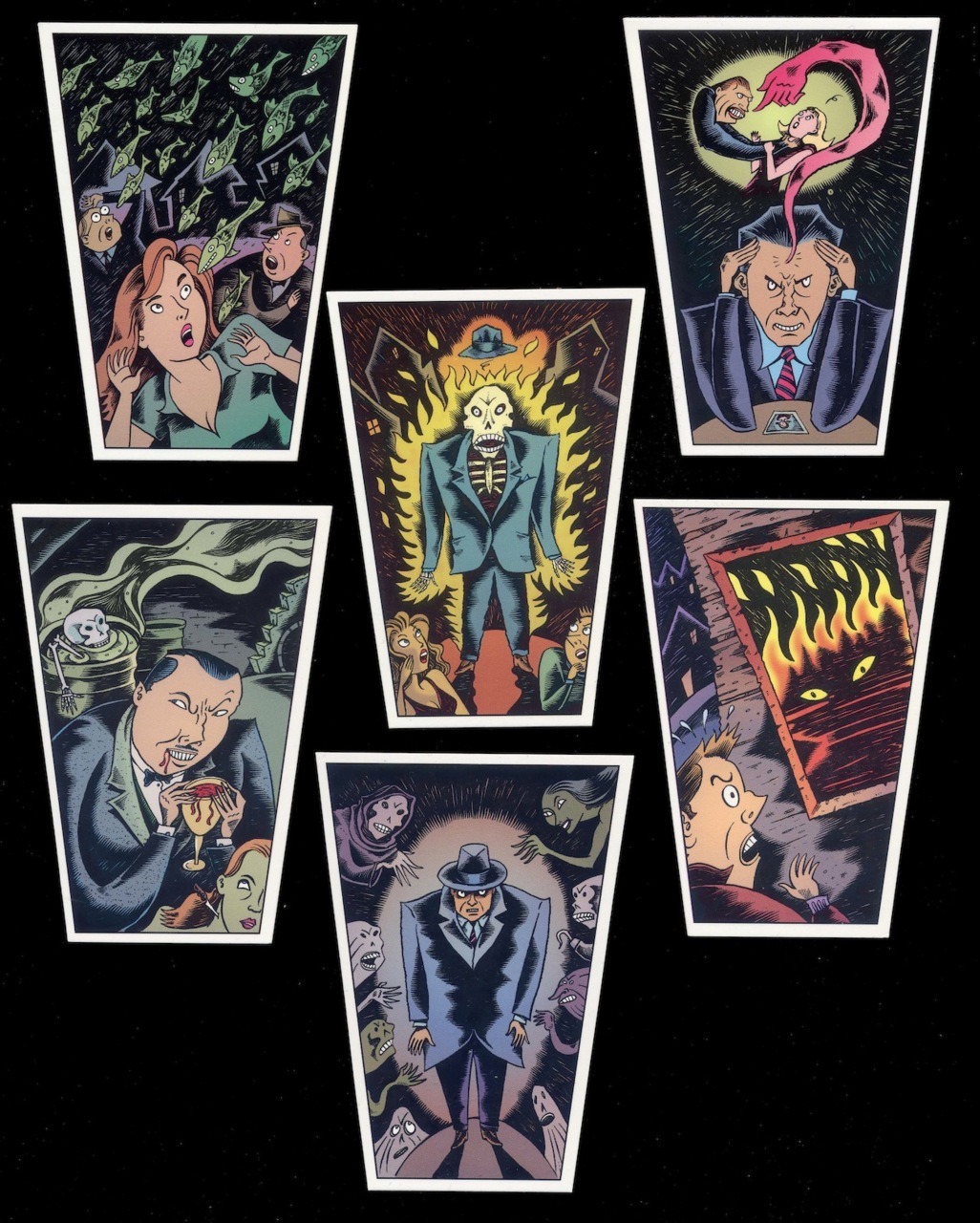
From the RIP card set of strange phenomena ~ (1) Rain of fish (2) Psychic detective (3) Spontaneous combustion (4) Real life vampire (5) Fire ghost (6) Ghost hunter

Something Should Remain Unsaid
#Narrative art must be clear, but it must also be mysterious. Something should remain unsaid, something just beyond our understanding, a secret. If it’s only clear, it’s kitsch; if it’s only mysterious (a much easier path), it’s condescending and pretentious and soon monotonous.
STEPHEN SONDHEIM
Something Should Remain Unsaid
Red carpets, interviews and social networking are all alien to him. When a friend told him that he was trending on Twitter following his debut as Moriarty, he made a rare foray online. “So terrifying,” he says burying his head in his hands. “I would never go on it again. Oh God, it just made me want to go to sleep for three weeks. People said lovely things but then people also said the most vicious, horrible things. It’s an outlet for the angry. It’s like going into a room and being punched, then kissed, then hugged, then kicked, then complimented and then slated.”
If you use willpower only to deny yourself pleasures, it becomes a grim, thankless form of defense. But when you use it to gain something, you can wring pleasure out of the dreariest tasks. Young people who seem hopelessly undisciplined in school or on the job will concentrate for hour after hour on video games because there’s a steady series of prizes. That’s the feeling to aim for in the real world.
In order to move up the scale of emotions and become more
attractive to the things you want in life, all you need to do is
let go of your story - the idea that having what you want will
in any way change your life for the better or for the worse.When you recognize that you don’t need what you want, you’re
free to have it - and freedom is perhaps the ultimate goal…
The second secret, what they never tell you, is that yes, anyone can become a writer. Merely consider any novel by Judith Krantz and you’ll know it’s true. The trick is not to become a writer, it is to stay a writer. Day after day, year after year, book after book. And for that, you must keep working, even when it seems beyond you. In the words-to-live-by of Thomas Carlyle, “Produce! Produce! Were it but the pitifullest infinitesimal fraction of a Product, produce it in God’s name! ‘Tis the utmost thou has in thee: out with it, then. Up, up! Whatsoever thy hand findeth to do, do it with thy whole might. Work while it is called Today; for the Night cometh, wherein no man can work.”