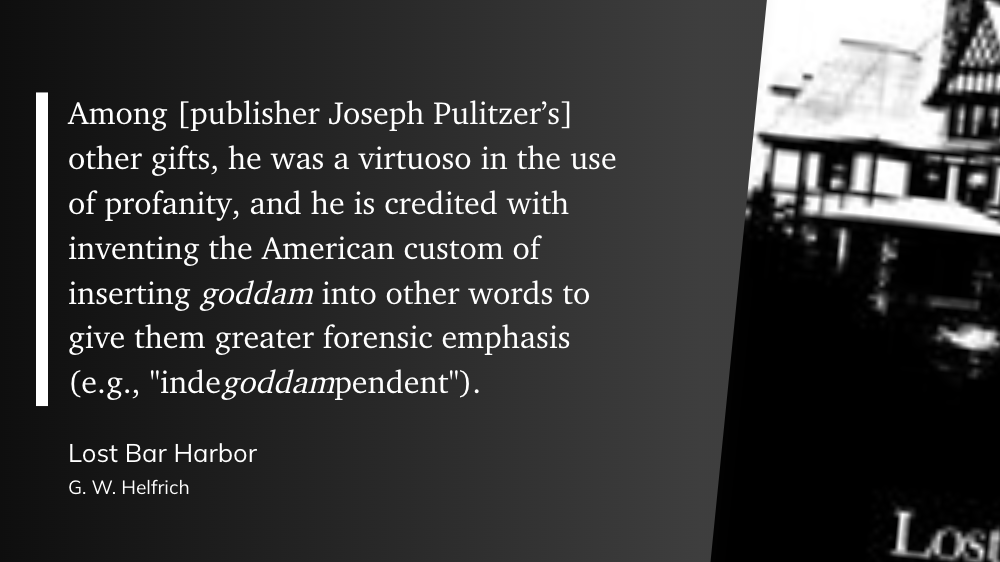
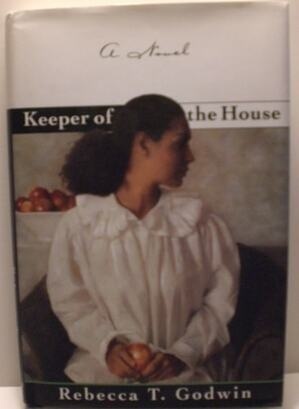
Finished reading: Lost Bar Harbor by G. W. Helfrich and Gladys O’Neil, The Great Fire of 1947 and the End of Bar Harbor’s Golden Era by Mac Smith. 📚 Purchased at Sherman’s Book & Stationery.
During our stay at the wonderful Sand Bar Cottage B&B, our host recommended these books if I wanted to learn more of Bar Harbor history.
Of the two, Lost Bar Harbor is the most evocative. An oversized paperback with large archival black and white photos of the hotels and “cottages” (mansions, really) that filled Bar Harbor when it was society’s summer resort from the Gilded Age through the 1920s. High society fell in love with Bar Harbor and Bar Harbor with its rich and famous summer residents.
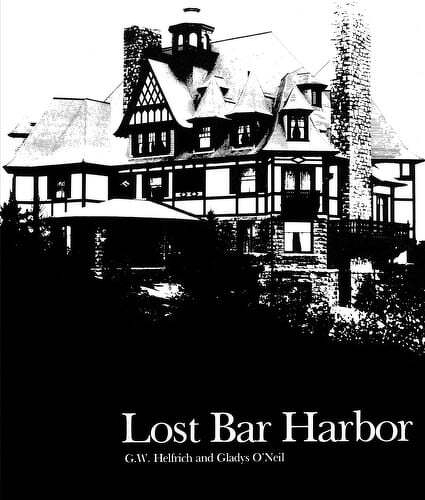
Helfrich and O’Neil’s introduction paints a picture of American financial royalty and its culture in the remote New England coastal village their money remade: “There were dances at the hotels every night during August, receptions and dinners at the cottages, parties on board the yachts, picnics, sailing parties, garden parties, and concerts, and always good conversation – the best, according to Barrett Wendell of Harvard, to be found anywhere in America.” The town was almost giddy with the arrival of their rich summer residents. A cottage social directory was published each summer noting all the upper-class comings and goings.
The book’s archival photos are antique and reproduce a bit muddy, but the size and scope of the buildings they document are nevertheless impressive. Brief squibs accompanying the photos provide a biography of the place, its owners, and its architects. Only one entry includes pictures of a cottage’s interior, and I found those pictures to be the most evocative for expressing the town’s own Belle Époque.
But many of the entries end with the same, rather poignant final words: “torn down,” “demolished,” “razed,” “destroyed,” and – most commonly – “burned in the 1947 fire.”
The Great Fire of 1947 swept Mount Desert island and nearly engulfed Bar Harbor. The fire struck during a year of severe drought, a summer of intense heat, and violent winds that made fighting the fire both dangerous and nearly impossible to outwit. The fire ravaged the island, destroyed all the grand hotels, and many of the cottages.
But both books are clear that, even long before the fire, the area’s days as a resort getaway were over. Helfrich and O’Neil: “It is popularly believed that the Great Fire of 1947 finished off Bar Harbor as a resort. But the fire was for many a blessing in disguise. Although a third of the 222 cottages burned, many were already empty or for sale. Bar Harbor had tottered through the depression and World War II, and the 1947 Cottage Directory reveals that only 135 cottages were occupied that summer. By this time, Bar Harbor was already ’lost,’ although a few relicts of happier days were to linger on …”
You can still see traces of the old hotels and cottages here and there in Bar Harbor: concrete steps leading to nowhere, stone pillars flanking a disappeared driveway. Our host pointed out that, before the fire, the hotels and cottages lined the main road leading to the Bar Harbor turnoff, leaving the little town itself to be a village of small houses near the water with a commercial block of stores and buildings. But after the fire, commerce moved down that small road to the harbor. Today, that little village is bustling, bungalow prices are sky-high, and one business owner told us he lives 45 minutes away because he can’t afford to live in Bar Harbor.
Smith’s book on the 1947 fire has no pictures or – more relevantly – maps to help orient the reader, but his account is the authority on the conditions that led to the fire, speculations on how and where the fire started, and an almost daily account of how firefighters, military, volunteers, and communities came together to save as many lives and properties as they could.
The Great Fire of 1947 is helped along by Smith’s use of previous oral histories of the fire, interviews, and other documents that provide color and personality to the telling. The result, while informative, is a tough reading experience. When I say this book is “authoritative,” I mean that any forward movement of the story is stopped by large lumps of data that no casual reader could possibly be interested in but that future students of the fire may well find useful. If you want to know the names of all the committee members who served on the reconstruction finance committee following the fire, this is your book.
We had an unintended, somewhat depressing, Netflix theme going recently: documentaries of forgotten women who led enigmatic lives. Given the attention they have received in recent years, it’s as if their lives only became interesting after their deaths. You can certainly read all about the stories of Joyce Vincent and Vivian Maier on Wikipedia, but from such sources you only get, as Emily Dickinson would say,“the facts but not the phosphorescence.”
What makes these documentaries necessary are the detective work the filmmakers perform as they answer the questions we as viewers have about their subjects’ lives. More to the point, the films attempt to find and interview the people who knew these women and whose recollections, of necessity, can construct only incomplete pictures.
Finding Vivian Maier
For Finding Vivian Maier, pictures is the operative word.
The filmmaker, John Maloof, bought a trunk of her belongings at an auction house, discovered sheets of her negatives, and was intrigued by their content and artistry. He sought out everything else she had squirreled away and stuffed into a crammed storage unit.

It was clear from what she left behind that Vivian was a hoarder: newspapers, clothes, hats, shoes, trinkets, election badges, receipts, bills, uncashed tax refund checks, bus and rail tickets – ephemera of all sorts. But along with all of that were thousands and thousands of B&W negatives, hundreds of rolls of unexposed B&W film, color slides, and Super–8 movies from the early 1970s.
Maloof was captivated by her guerrilla street photography, her formal experiments with self-portraits, and the sometimes playful pictures she took of the children and families for whom she worked as a nanny. As a photographer, she got close to her subjects in ways that were extraordinary. Based on the evidence of her negatives, she took her craft seriously and knew that she had an eye.
(Maloof’s web site contains galleries of her photos and I strongly urge you to spend some time with them, if you’ve never seen them before. They’re both time capsules and timeless.)
To Maloof, and to others who saw these pictures, she was clearly an artist. Why, then, had no one ever heard of her? Why did she make so few prints of these remarkable images and do nothing with them? Her life – which this intensely private woman held close to her – and her choices were a mystery he felt moved to solve.
Maloof’s documentary (co-directed with Charlie Siskel) starts out being about him, his background, and his discovery of and increasing obsession with Maier. As the movie goes on, though, the detective work on Maier’s life takes center stage and Maloof wisely steps into the background where possible.
The most fascinating interviews, for me, were with the adults whom she had looked after as children and their memories of seeing Maier’s behavior when she was unobserved by her employers. While it was clear to all who met her that she was an eccentric, the children sometimes – in some cases, often – saw that eccentricity veer scarily to either aloof or threatening behavior.
The persistent question from Maloof, the professional photographers and artists he interviews, and Vivian’s acquaintances (she never really had “friends”) is: why did she keep her amazing photos a secret? Why did she do nothing with them? The impression given is that Vivian could have had a career as a significant artist had she only gone public with her photographs.
The film cannot answer that question, of course, though it seems to Maloof the primary mystery of Vivian’s legacy. But it didn’t strike me as a mystery at all. To me, the obvious answer to why she never cashed in on her remarkable photographs is, “Because that’s not why she took them.” She evidently got out of her picture-taking exactly what she wanted. Putting aside the fact that she appeared not to know any artists nor sought out any sort of artistic community nor even bothered to properly care for her film and negatives, it seemed clear to me that Vivian had no ambitions or inclinations to be a professional photographer.
She did not treat her photography the way most of us treat a hobby, as a refuge or comfort or renewal from our daily grind. Picture-making did not seem to give her any emotional comfort or reward. At times it appeared to be a compulsion, certainly, but not something that gave her pleasure.
Why take all those pictures then? Because the camera offered Vivian a way to hoard ephemeral things: moments, images, impressions, anything that caught her attention. As long as she knew she had the negatives or undeveloped film, then she knew she could get back to them “someday.” One of the interviewees said Maier had so many newspapers stacked in her attic room, her father had to install a steel beam to bolster the sagging floor. She treated her negatives the same way as she treated her receipts, hats, clothes, and newspapers: it was all the same to her.
Vivian clearly suffered some trauma in her life that led to her eccentric behaviors. Taking pictures may have been a way to use the camera, which was always around her neck, as a buffer between her and the world while still enabling her to participate as an observer and collector, as someone who could control the experience.
A new acquaintance asked her one time what she did. She answered, “I’m a spy.” The filmmakers imply she led a double life, working as a nanny while taking pictures of both the world and herself – a secret she held to herself as tightly as she did many others.
Dreams of a Life
Of the two films, Dreams of a Life is definitely the sadder and more disturbing movie, and the one that gnaws at me when I stop to think about it. Finding Vivian Maier, while not a light piece, has the grace of Vivian’s art uplifting it and Maloof’s dogged detective work to uncover her life’s mysteries though not all her secrets. And there is the successful recovery of a trove of photographs that would otherwise have been lost forever.
Dreams of a Life is more spare and troubling. Not least because Joyce Vincent left so little evidence of her life and activities. Former friends and co-workers who knew her can describe what she looked like, how she behaved, the stories she told, but these are only the outer edges of her life as observed by others with the center left tantalizingly, frustratingly blank. There is little to celebrate.
The film starts with the death of Joyce Vincent – or rather, the discovery of her body. To the best anyone can reconstruct, the 38-year-old died in her bedsit in a rather shabby part of London in December 2003. But her body wasn’t discovered until January 2006. What was found were her skeletal remains; as one interviewee chillingly put it, her body basically “melted into the carpet.” With no soft tissues available for forensic examination, no one can know how she died. She was only positively identified via dental records.
The story angle picked up by the media was what one would expect: how could this have happened? Where was her family? Her friends? Why did no one try to find her or call her or look her in over 2 years? Where was the landlord? The neighbors? And where were the public services? When her body was found, the television and heating were still on. And another grim, poignant detail: her body was surrounded by wrapped Christmas presents with no name tags. Her death – and the absence of concern about her absence from the world – became a metaphor about the lack of personal relationships in a crowded, always-connected modern society.
It’s a haunting story that caught the attention of the filmmaker Carol Morley. She took out ads soliciting information from anyone who knew Joyce, slowly locating and tracking down friends, acquaintances, co-workers, former partners, an old roommate. The family declined to participate in the movie.
As Vivian became Maloof’s muse, so Joyce became Morley’s. The timeline she created to track Joyce’s movements through her life, and particularly her difficult last years, is glimpsed throughout the film. The jumble of whiteboard notes, photographs, and news clippings introduce episodes in Joyce’s life, interview subjects, and even suggest events that Morley did not or could not include. Without information from Joyce’s older sisters to fill in needed gaps, and without eyewitnesses to key points in Joyce’s life, the movie’s narrative is maddeningly patchy with too many questions left unanswered.
But Morley deftly turns that lack of information into an opportunity. What had been blank space instead becomes an empty canvas where every interview subject can paint their own picture of Joyce.
They describe Joyce as beautiful, funny, charming, someone who held increasingly responsible jobs – she was the person who looked absolutely put together and undoubtedly led a remarkable life. She was the center of attention – especially men’s – when she walked into a room. She seemed an innocent and trusting soul. How could anyone so attractive and charming not lead a fascinating life?
But other details of her personality emerge from the interviews. She didn’t talk about her family. She said her father was dead when he wasn’t. The most significant detail to me was how she took on a new boyfriend’s circle of friends as her circle yet never spoke or talked about any other friends she might have had before. When a relationship ended, she drifted away from the circle and was rarely seen by them afterward. It was as if, with every new job and every new relationship, she shed her old skin – old apartment, old friends – and re-entered the world as a new person. A blank slate for everyone, including herself.
The most compelling interviewees, to me, were a former boyfriend Martin and her no-nonsense former flatmate Catherine. Martin seems the quintessential, conventional nice guy who tried helping Joyce and wonders if he could have done more. Catherine, on the other hand, is quick with her judgments and clear on what she knows. Her story of the last time she saw Joyce had me gobsmacked – not just Joyce’s behavior, but Catherine’s cool, unsentimental reaction to it. Catherine and Martin would have been great friends to have in your corner and may have counter-balanced Joyce’s maddening lack of focus. But Joyce deliberately pulled away from them as she pulled away from everyone and seems mainly to have drifted through her life.
Morley enjoys throwing her interview subjects a curveball on-camera to get their reactions. In one, she plays a tape of a song Joyce had recorded, ending with a giggly sign-off. They’re startled to hear her voice. They laugh and then say the cute sign-off sounds just like Joyce. Except for Catherine, who says it sounded not at all like Joyce. These contrasts become an interrogation of not only who Joyce really was – something no one will ever know – but how she is remembered and how incomplete those memories are.
If every one has their own image of Joyce, then Morley does too. Her dreams of Joyce’s life are presented in re-created scenes from Joyce’s childhood and adult life based on stories Joyce told her friends. The actress Zawe Ashton plays Joyce in scenes – a disastrous birthday party, dancing at a club – that are recollected by the interviewees. The movie re-creates the discovery of Joyce’s body and the subsequent cleanup and forensic investigation of the apartment but with no attempt to visualize her corpse (I am thankful that Morley does not reproduce any photographs taken at the scene). The movie cuts between scenes of a vibrantly alive Joyce and the grim clean-up of her desolate apartment.
I don’t like recreations, as a rule; I can see the need to visually liven up a stretch of the film that would otherwise only have talking heads. But if you can’t document what actually happened, then it’s not a re-creation, it’s a fabrication. One moment particularly angered me. In it, Ashton portrays Joyce singing along to a record with a hairbrush as her microphone, echoing an earlier scene when the 5-year-old Joyce “performs” for her sisters and mother. As the record finishes, the adult Joyce stops the singalong and breaks down in tears. I understand that this is Morley’s vision of the Joyce she feels she has come to know, but to me, it was needlessly sentimental glop and a violation of Joyce and her memory. Her story is sad enough without this scene gratuitously amping it up.
Both movies haunted me
Vivian and Joyce kept the world at arm’s length for reasons no one will know. They were solitary women seeking a family, I think, and never quite finding it or quite fitting in. These movies record how the people who knew them saw them, interpreted them. And the movies themselves are not objective; they frame their subjects just as interpretively.
Vivian’s life is a mystery full of clues, and her legacy is the body of work she knowingly created, albeit without any plan. Was she an artist, as so many of the commentators in the movie think? Is that why she took all of those pictures? Or was taking pictures something she was compelled to do, the same way she hoarded newspapers and receipts? Fortunately, these questions don’t have to be answered to enjoy her remarkable photographs. Vivian found a place in the world, at last. And her story, the mysteries of her life, add a captivating allure to the images the world was very close to losing.
But it’s Joyce’s story that moves me on a deeper, sadder level and that I think will stick with me longer. Partly for the simple pathos of dying alone and forgotten. Partly because this was a tragedy that could have been prevented. I want to believe that she could have reached out more and that others could have tried a little harder to reach her (though the film makes clear that in her last months, she was deliberately in hiding and was avoiding contact with everyone from her old life). In the end, it was easier to lose touch than to maintain it.
And her story moves me to ask questions of my own life, as Morley intended it to. Because we’ve all known people for intense periods of time, however fleetingly: work, school, the other parents in the playgroup, hobbies, church. When I look back over my life, I have carried very few people with me into the present-day from previous jobs, from all the arts classes and community theater productions I did. I spent four very intense years getting my master’s, worked on many class projects with my fellow students and teachers, and got to know a few very well. Yet today, I am in only occasional touch with two or three. How well did we all really get to know each other? That’s the haunting question Joyce Vincent’s life raises: will anyone come looking for me?
By the way, I referred to both women here using their first names rather than their last names because I think it gentler than treating their shades as simply fodder for a stupid blog post. Kindness should be extended to these women even after the fact of their deaths.
Updated on 2026-08-06: Originally posted on March 5, 2015, but the post got eaten by micro.blog gremlins. Republishing.
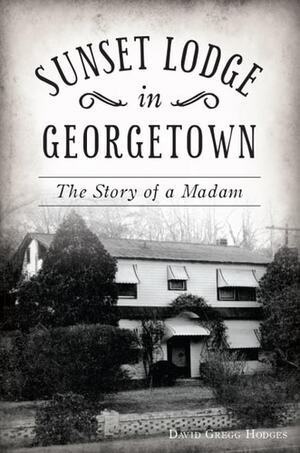
Finished reading: Sunset Lodge in Georgetown: The Story of a Madam by David Gregg Hodges 📚 Purchased at the Rice Museum gift shop in Georgetown, SC.
A fun book of local history by South Carolina native Hodges that is actually three smaller booklets jostling uncomfortably alongside each other.
The first – and best – booklet is the history of the Sunset Lodge brothel that operated three miles south of Georgetown, SC, from 1936 to 1969. The madam, Hazel Weisse, operated her business with ironclad rules for her “sporting ladies” and an equally disciplined relationship with the local community. She was always careful to never rub the town’s nose in the Lodge’s business, she contributed large amounts of money to local charities and the local economy, she cultivated relationships with local law enforcement and rich protectors, and so the community largely turned a blind eye to her brothel. Even while the sheriffs shut down other brothels, hers remained in business from the Roosevelt to the Nixon administrations.
Hodges, an amateur historian, also provides an excellent, compact history of the Georgetown County region from pre-Civil War days to the ’70s, and a glimpse at the industry of prostitution that dotted the Atlantic coast’s harbors and military bases.
A short chapter on Hazel Weisse’s life, from her early years in Chicago to managing a brothel in South Carolina, is necessarily sketchy. She protected her past as carefully as she did her reputation, and Hodges doggedly found and reported every scrap of documentary info he could find. But Weisse remained an essentially unknowable character and hovers over the narrative rather than dominates it; despite the book’s subtitle, Sunset Lodge in Georgetown: The Story of a Madam is not a story of her life. Rather, Hodges can report only the externals of her life and the stories of those who remembered her. She remains a tantalizingly unknowable presence. So the book instead becomes more a remembrance of Sunset Lodge and the stories that grew from it.
The second booklet – which takes up most of Sunset Lodge in Georgetown – is a storytelling project where Hodges reproduces in smoothed-out one- to three-page narratives some of the interviews he conducted with people who visited the Lodge, worked there, did business with Weisse, or otherwise had stories to tell about this legendary place and its inhabitants.
These are odd little narratives. Their titles reflect job roles – “IRS Agent,” “Deputy Sheriff,” “Minister,” “Cab Company Owner” – or stories of experiences – “Father and Son,” “First Time,” “Christmas Eve.”
Hodges states in his introduction that he anonymized the interviews and often combined some stories into a single narrative; sometimes, all he had was a punchline and then he worked backward to create a suitable narrative lead-in. If that’s the case, was this a story worth telling? I could never be sure how much of what I was reading was actual experience versus a useful fiction needed to fill in a story’s gaps.
The bulk of the book is taken up by these stories and reading them feels … odd. There’s little of the satisfying detail of corroborated history, but there are flashes of everyday life in Georgetown, of remembered history, that show how the locals accommodated the house: a little girl who stares wide-eyed at the sporting ladies entering the doctor’s office for their weekly check-up while her mother stiffens with outrage, the dress shop owner who carries the latest fashions to outfit the working girls, the postal worker who knows to mail packages sent by the girls to their families in plain brown wrapping, the sheriff who shuts down the clergymen gathered in his office to demand the house be closed.
But then there are other stories that limp to the finish line, or barely have anything to do with the Lodge or Weisse, and carry zero emotional weight. Or there are stories with the well-rounded shape of oft-told jokes or anecdotes that could be said about any whorehouse.
The lighthearted tone of this grab bag of stories jostles uncomfortably alongside the third booklet: Hodges’ mixed feelings about taking on the Sunset Lodge as a history project.
Hodges describes his own history of stumbling across the Lodge, and the fun he had doing the detective work of consulting newspapers and census records to corroborate facts. He especially enjoyed being a guest speaker at community clubs, where afterward people would tell him stories about the Lodge or put him on the trail of other people to interview.
But he’s also ashamed of enjoying himself a little too much and of the attention his topic brought him. As a conservative man and an elder in his church, Hodges makes it clear in several places he considered Weisse’s operation immoral and wrong. How many families, he asks, how many marriages were damaged because the menfolk frequented the Sunset Lodge? Fair enough. Only a few stories really push against the “good, clean, dirty fun” aspect of the Lodge legend: one where a father pays for his son’s first sexual experience, another where a group of high school girls joy-ride through the Lodge’s driveway and one of the girls recognizes her father’s car.
The last sentences of his book, after acknowledging Weisse’s business prowess: “It is not an excuse to do well that which should not be done at all. Perhaps other houses of prostitution will find it impossible to stay in business if local laws are vigorously enforced.”
Wow. After spending a whole book practically reveling in stories about the Lodge and documenting the light that sex work, and proximity to sex work, throws on human behavior, and considering how much he enjoyed talking to groups about and researching the Lodge (still giving pleasure long after its demise!), collapsing all that emotion and legend and history into a grim middle-class “crime shouldn’t pay” bumper sticker pops the balloon. It does Hodges’ work a real disservice.