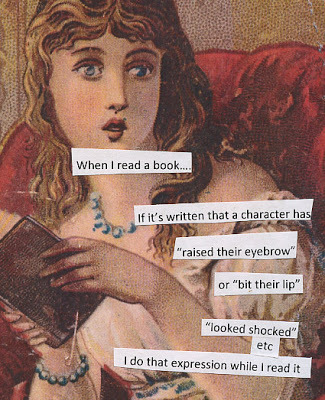
(via PostSecret)
(via PostSecret)
No one can accuse me of pandering or writing purely in the hopes of having a commercial hit. I doubt I could do that if I tried anyway. My friend pointed out that I also have a track record that establishes that I’m not fixated on having commercial hits. I forgot that part.
for ivaplays
But the hallmark of a good writer is not avoiding script calamities. They are unavoidable. It’s responding to them - working hard to get the story right, being prepared to sacrifice every part or piece of the story and ultimately the episode itself to get the story right so the jokes will fly. It is hard work, but it’s mostly indoors, done with a MacBook Pro, nearby copious amounts of coffee, so it’s not all bad.
[In other words, the only way out is through.]
Story-surgery is required at a number of stages - and is more easily done early on in the process. That’s why is worth being brutal with your story or outline before you start writing a script. It’s like baking a cake. Mary Berry says to make sure you measure the ingredients carefully. If you don’t, it’s very hard to remove flour from a cake and add an egg when the cake is in the oven. The script equivalent of removing flour from a cake is through-the-night rewrites, caffeine overdoses, panic, sweat and weight gain. This, in my experience, can be exhilarating, once or twice but is mostly no fun
December has been an unusually stressful month this year, what with jury duty, a rather punishing work schedule, and the usual Christmas shenanigans.
One of our Christmastime rituals is driving down to Florida to visit Liz’s brother and sister-in-law. It’s about 750 miles, door-to-door, and we do it all in one day. In the past few years, we’ve driven on Christmas Day (less traffic, generally, and no road work), but this year we drove down on the Sunday before Christmas. The traffic was denser and pushier, with about three slowdowns through the I-95 deadlands of South Carolina, a few necessary rest stops, and so on.
The next morning, the 24th, I ran out of hot water about halfway through my shower. We then went to the Publix grocery store to buy some necessities for the week and ingredients for a dish Liz would make on Christmas Day. Shopping and navigating my cart through the aisles reminded me of driving through Orlando the night before (i.e., dense, crowded, lots of defensive driving, and being stoical in the face of madness).
After the shopping, we went next door to the Mexican restaurant for lunch. We ordered, I drank my iced tea, and I started to slow down. At some point, while sitting at that table, eating chips and salsa, I relaxed because I realized -- for the first time in a couple of months -- I was not in problem-solving mode anymore. I didn't have to plan my work for that afternoon, craft a last-minute PowerPoint presentation, juggle time to buy Christmas presents, deal with my insurance company, calculate car lengths and speeds on the fly, or endure a surprise cold-water shower.
For Liz, her vacation started the minute our wheels turned for Florida. For me, it started when I had the leisure and space to just sit and relax and enjoy what was in front of me.
How would you like to be remembered?
I would like to be forgotten. What’s so good about being remembered?
My friend, the novelist Lewis Shiner, has a new Christmas short story up on the Subterranean Press site. It's titled "Merry Christmas from the Kensingtons" and is Lew's own Christmas ghost story -- particularly the ghosts of Christmases past as lived out in a series of annual family photo postcards.
![[ C ] Joseph Cornell - Penny Arcade (1962)](http://farm6.static.flickr.com/5137/5498928968_bf62a28f39_m.jpg "[ C ] Joseph Cornell - Penny Arcade (1962)")
It's a haunting story, and in reading just the simple descriptions of the family members as they age and grow, I found myself writing each person's lifestory in my head.
Lew said he had bought such a stack of family photo postcards at a flea market and the images, showing each family member growing older and with their personalities inevitably peeking through, year after year, haunted him.
I share his fascination and deep imaginative involvement with found objects. I've always found art installations made from found objects more interesting than other types of sculptures, for example. I also enjoy such items as densely collaged artwork and Cornell boxes; contemplating the original objects and sorting out my reactions to them, and then to their new associations and relationships within the artwork, can keep me staring for hours.
The power of Lew's story -- and of those found images -- shook loose a memory from my own mental lumber room of when I cleaned out the attic of our rental house before moving to our current home.
In a far corner of this huge attic I found posters and birthday cards from the 40th birthday of a previous resident, a woman named Timothy. "Lordy, lordy, Timmer's forty!" was one of my first clues, doncha know.
It was amazing the story I was able to piece together from these remnants -- she worked as a nurse at Duke, was taking a job in Virginia, and there was a touching birthday card from a young woman (I assume young) who had turned down Timmer's profession of love but still wanted to show her affection and respect.
It was surprising and a little sad to find these relics in a far corner of the attic -- they meant enough to her to save them, at one time. But maybe she'd forgotten about them or she had to leave town in a hurry.
I also remembered a box of personal memorabilia I had found years ago in my parents' basement. It contained letters I'd received from a Doctor Who pen pal named Bobbie, who had placed a pen-pal-personal ad in some DW fanzine or other in the early 1980s. As she wrote me later, she had broken up with someone, was feeling sorry for herself, placed her ad, and then found herself writing to lots of feeling-sorry-for-themselves guys. She and I wrote for several years until she got married and then our correspondence ran its course and dried up.
I met her one time only, at a DW convention in Columbus, OH, where she lived. This would have been a few years after we'd started writing to each other. It was a little awkward at first -- pen-pal correspondences are not conversations, after all, but exchanged soliloquies.
We eventually were able to spend some time together and chat. I don't remember what we talked about, but I do remember that, at some point later on during that first evening at the convention, that she was in my car and we circled the hotel parking lot just talking, and then she went back into the hotel.
When I found her trove of letters in this box 20-odd years later, I re-read them and decided to send them to her. Not knowing her married name, I found that her mother still lived at the old address. So I mailed her a package with Bobbie's letters and a cover letter telling her how much Bobbie's letters had meant to me at that time. Since I had enjoyed them the first time I'd received them, and enjoyed them again 20 years later, I thought it was only fair to share them back to Bobbie so she could enjoy them too.
It was a weird little project, I guess. But it felt like the right thing to do.
I wound up getting an email from Bobbie! She was kind of flabbergasted that I'd saved the letters -- OK, no argument there. But I was the kind of person who liked Doctor Who, had pen pals, and saved paper ephemera, so I already dwelled beyond the boundaries of "normal" society.
In her email, she said she found that re-reading her old letters reminded her of events and feelings she'd forgotten, so she was grateful to have them.
She also tantalized me by saying that there was something I didn't know about that night in Columbus, something she was a little embarrassed about sharing but that she'd tell me in her next email. I wrote her back with my thanks and said I'd love to hear whatever she wanted to tell me, if she was comfortable doing so.
Alas, she never wrote me back and never replied to any of my subsequent emails. So I'll never know what happened or didn't happen or might have happened that night in Columbus.
And therein, I suppose, lies the power for me of found objects (which I just now mistyped as "fond objects") and untold stories -- they tantalize by showing just enough clues to suggest a story but never enough to solve their mystery. And it's the mystery, for me, that endures.

Artists don’t talk about art. Artists talk about work. If I have anything to say to young writers, it’s stop thinking of writing as art. Think of it as work.
PADDY CHAYEFSKY