Claude Shannon, father of information theory, separated information from meaning. His central dogma, “meaning is irrelevant” declared that information could be handled as a mathematical abstraction independent of meaning. The consequence of this freedom is the flood of information in which we are drowning. The immense size of modern databases gives us a feeling of meaninglessness…It is our task as humans to bring meaning back into this wasteland. As finite creatures who think and feel, we can create islands of meaning in the sea of information.
Freeman Dyson, in his review of James Gleick’s book on information, in NYRB
If we really want to understand our fellow human beings accurately, we must allow them to surprise us, to contradict what we think we know about them. Like good scientists, we should cling to our theories about people only loosely and always be willing to revise them in light of new data.
Robert Hughes (1938-2012)
#Like many other Americans, I became aware of Hughes through his "Shock of the New" documentary and considered myself lucky to snag a copy of the hardback from a remainder table at the (long-gone and lamented) Intimate Book Shop in 1983. Most people can name critics of movies, music, and books because we hear those products talked about on NPR or Entertainment Weekly. Art critics -- not so much. The only one I could name with any confidence would have been Hughes. I did not read much of his stuff, but like Gore Vidal or Pauline Kael, I had only to read a few lines and I could hear the cadence of his prose, and the stunning way he could put together a sentence. I always liked his boisterous charisma and certainty.
The following paragraph is from his memoir, "Things I Didn't Know." Thanks to The Daily Beast for bringing it to my attention.
“I am completely an elitist in the cultural but emphatically not the social sense. I prefer the good to the bad, the articulate to the mumbling, the aesthetically developed to the merely primitive, and full to partial consciousness. I love the spectacle of skill, whether it’s an expert gardener at work or a good carpenter chopping dovetails. I don’t think stupid or ill-read people are as good to be with as wise and fully literate ones. I would rather watch a great tennis player than a mediocre one, unless the latter is a friend or a relative. Consequently, most of the human race doesn’t matter much to me, outside the normal and necessary frame of courtesy and the obligation to respect human rights. I see no reason to squirm around apologizing for this. I am, after all, a cultural critic, and my main job is to distinguish the good from the second-rate, pretentious, sentimental, and boring stuff that saturates culture today, more (perhaps) than it ever has. I hate populist [shit], no matter how much the demos love it.”
—Robert Hughes, Things I Didn’t Know
Fritz on happiness
#What is more important than happiness is involvement. We want to be involved with our lives, other people, projects, and the creative process. In that involvement, we will experience a range of moods, emotions, feelings from high to low. It comes with the territory. And, in those wonderful moments, when you are happy, it is something to appreciate for what it is, an exquisite interlude that makes up in height for what it lacks in length.
Robert Fritz
Nietzsche on the dangers of waiting
#In nooks all over the earth sit men who are waiting, scarcely knowing in what way they are waiting, much less that they are waiting in vain. Occasionally the call that awakens—-that accident which gives the “permission” to act—-comes too late, when the best youth and strength for action has already been used up by sitting still; and many have found to their horror when they “leaped up” that their limbs had gone to sleep and their spirit had become too heavy. “It is too late,” they said to themselves, having lost their faith in themselves and henceforth forever useless.
Friedrich Nietzsche
Writing Is a Business
#“Writing is a business and should be practiced as such. On days when you think you can’t possibly write a line you do it anyhow.”
Writing Is a Business
Two things
#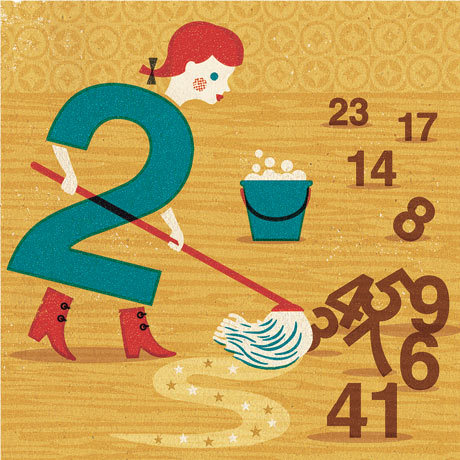
About a third of the self-help books that cross my desk could be distilled to two things: first, if you can tolerate a little discomfort, you can achieve almost any goal; and second, it’s amazing the lengths we’ll go to to avoid discomfort. (via This column will change your life: the two things | Life and style | The Guardian)
"It's no good having one without the other"
#In September of 1968, in what he jokingly termed “E. Gorey’s Great Simple Theory About Art,” Gorey wrote these Yodaesque words:
“This is the theory ... that anything that is art ... is presumably about some certain thing, but is really always about something else, and it’s no good having one without the other, because if you just have the something it is boring and if you just have the something else it’s irritating.”
"Books I could get along without"
#“We moved today to 415 Central Park West. Enormous business of packing and unpacking my books, which I have been carrying on my back for so many years. Lord, how I would like to get free of all these things sometime. I date my maturity from the day I realized there were books I could get along without.”
Alfred-Kazin/Journals/book
In an essay written last year for the SMiLE tour booklet, Van Dyke professes still not to know what “Over and over … ” means. That’s indeed a respectable position for a poet to take. John Ashbery, whom many readers would consider the greatest living American poet, has said that he has no idea what it is he’s doing when he writes. The work of making and the work of noticing and explaining are two different things. I tend to distrust poets who are willing to explicate their work, and I cringe a little when someone asks “What did you mean by that?” It’s for the reader to make something of what he or she reads, and that’s what I’ve been doing here.