Posts in "Review"

"We proceeded on."

Finished reading: Scenes of Visionary Enchantment: Reflections on Lewis and Clark by Dayton Duncan ๐Ÿ“š

Growing up in the South, Lewis and Clark were names in a history book. Important enough to study for a test answer, but with no local associations to their exploits they did not live long in the memory. (In North Carolina, it’s all about the Lost Colony, a few Revolutionary War sites, lots of Civil War battlegrounds, and a few civil rights landmarks.)

When we visited the Fort Clatsop Bookstore near Astoria OR in 2024, I bought several Lewis and Clark related books because I knew nothing about them. I opted for essay collections because I thought they would provide both a sweeping view of the mounds of historical data compiled about the Corps of Discovery and spotlights on specific moments that defined the expedition.

The first book I read, Stephenie Ambrose Tubbs’ Why Sacagawea Deserves the Day Off and Other Lessons from the Lewis & Clark Trail, was a good introduction for a newbie but it was a warm-up for the real deal, Dayton Duncan’s Scenes of Visionary Enchantment: Reflections on Lewis and Clark.

For my money, this is the best introduction to Lewis and Clark, why their exploits were so important, and why they have a hold on not just historians but the public imagination. Duncan’s essays are grounded in a love for and personal scholarship of the Lewis and Clark lore, a plain and straightforward writing style that clearly conveys information and detail, enough personal details and opinion without the essays centering on the writer, and an approach to the material that is respectful, imaginative, and clear-eyed.

What do I mean by that latter claim? Duncan is a Lewis & Clark enthusiast and until reading these books, I did not know there were so many devotees who re-read the journals of the expedition and trekked to retrace the Corps’ path. It’s his imaginative evocation of the Corps’ historical melieu that helps lift his storytelling – or retellings of these well-known episodes – to a more expansive dimension.

Duncan is always careful to remind the reader that, while we know the expedition’s outcome was successful, that was never something the two captains assumed. Duncan reminds the reader, at all times, that boldness, prudence, resourcefulness, grit, hard work, physical endurance, and sheer luck worked together to bring all the expedition’s members – save one who died of a burst appendix – back home safely. As Duncan points out, this is one of the few such excursions in history that actually ended successfully.

I never knew, for example, that the Spanish Army had set out with hundreds of soldiers and Indians to either capture or kill the Corps’ members. But information traveled so slowly and through such torturous routes in those days, that Lewis and Clark never encountered their pursuers. It’s likely they never even knew they were being pursued.

Duncan takes the data – Lewis and Clark and several of the soldiers under their command kept journals, and the wealth of firsthand information is what makes L&C scholarship such a rich field – and serves it up in really appealing ways. One essay is all about what the homefront newspapers were reporting during the two-year trip and how Jefferson was sweating waiting to hear about whether his bet on Meriwether Lewis and the expedition would pay off or whether they would simply vanish without a trace.

Duncan’s essay on 10 leadership lessons from Lewis and Clark starts as a take-off on those faux-business leadership books. But he indeed draws 10 good lessons from the journals by retelling and reframing the stories, mining the journals for details that evoke that time and place.

As for clear-eyed: as this quote makes clear, the aftermath of Lewis and Clark’s discoveries was not a success for the native tribes or the natural world. Comparatively little of what the Corps saw on their travels can be seen today due to dams, development, and American capitalism’s inability to let a good thing be. The native populations that were so numerous and culturally vibrant were reduced by smallpox, broken treaties and promises, and depleted natural resources.

Some of the most affecting passages for me were descriptions of what happened to the captains and crew after their triumphant return. There are few records of what happened to all the Corps soldiers. And Ambrose is clear-eyed about the individual failings of Lewis and Clark; while the trail and its outsized adventures and exertions brought out the heroic best of their characters, their return to civilization almost inevitably shrunk them back to society’s size.

Lewis suppressed the publication of a book by one of his soldiers so it would not compete with his own account – which he never wrote. Lewis’s depression swiftly returned after he re-entered civilian life and he was dead 3 years later. (Murdered or a suicide? Again, lots of lively debate on that .) Clark’s slave, York, accompanied him on the trail. As Duncan speculates, York’s voice was considered during crucial votes taken along the trip and the hardships of the journey equalized all the men (and woman). But back home, Clark refused to free York and was irritated by York’s insistence on joining his enslaved wife.

That’s what I love about Duncan’s essays: they show the high and the low, the best and the worst, the heroic and the craven, the beautiful and the ugly. The Lewis and Clark story is too vast to be one thing. It’s many things encompassing many stories, and these essays can start a new explorer of that landscape on the right path.
My Nova Scotia Books 7

๐Ÿ“š Purchased in Annapolis Royal, NS

From Joann’s Chocolate Shop & Cafe: A charming little cafe where the owner makes her own chocolates and candies. And as if that weren’t enough, she has a goodly number of both used and new books.

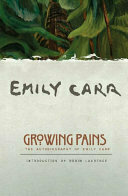
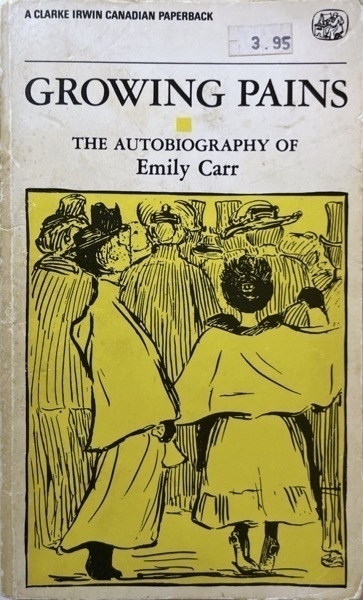
Growing pains.

Growing Pains by Emily Carr: this was our bedtime reading and a terrific description of long-ago places and times.

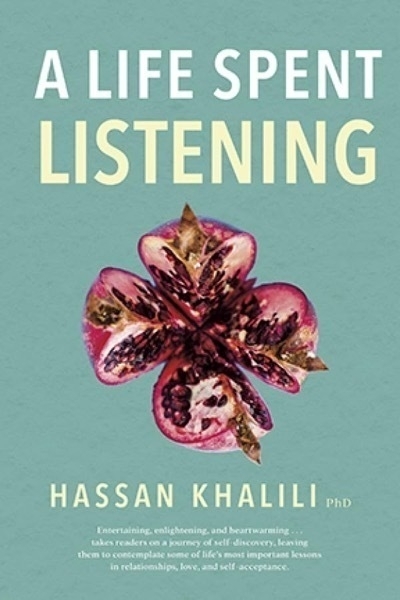
A Life Spent Listening by Hassan Khalili

This is still on my to-read shelf. I like self-help books, and was interested in this one as the author is an Iranian immigrant who practiced psychotherapy in Newfoundland for 40 years – interested in finding out how or if his Iranian culture influenced his work with Canadian patients and vice versa.


From Bainton’s Tannery Outlet/Mad Hatter Bookstore: Props to Google Maps for finding this store for me; Bing and Apple Maps found the Mad Hatter Wineshop next door, but did not identify these establishments – which are an odd couple on the face of it. The tannery and leather goods occupy one side of this rather snug store, with new books on the other side. What struck me about their book selection was its strong focus on local culture, specifically Annapolis Royal history and culture; many of the books were attractively designed objects ideal for holding in the hand.

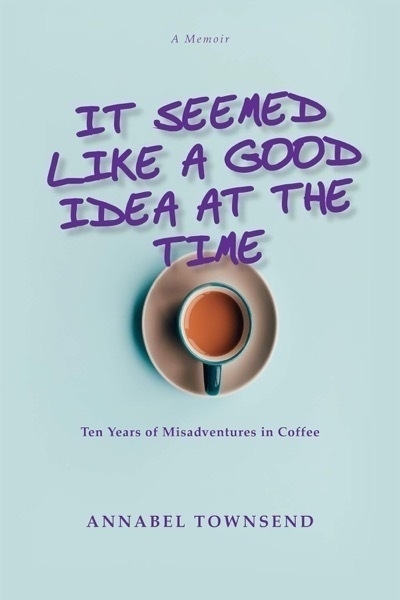
It Seemed Like A Good Idea At The Time by Annabel Townsend : Not Nova Scotian at all, more Saskatchewan. I bought it thinking we could use it for bedtime reading; it was lightly amusing, but not for us.

Nymphalis antiopa.

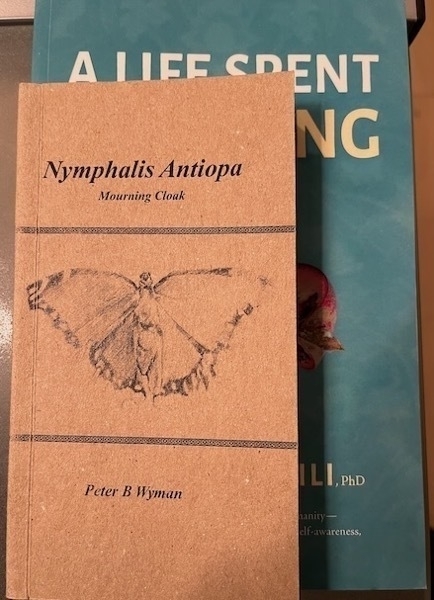
Nymphalis Antiopa by Peter B. Wyman

A small book of seven literary short stories. By “literary,” I mean the stories contain elegant writing and description, not much plot, some modest narrative experimentation, and their temperature never rises high enough to lift them off the page. Still, a couple of stories stuck with me. “Broken Angel” follows the police chief as he patrols the blocks of town devastated by the “Great Fire” of 1921; as I read, I remembered street names and landmarks that are key reference points in the story. The last story, “Radio Silence,” follows the narrator as he takes a winter hike along a particularly treacherous stretch of woods lining the shore along the Bay of Fundy and discovers a World War II legacy gifted to him by the strait. It’s a story of time passing, of rhythms, and of resting places.

Note: I was unable to find where this book could be ordered online; searching on the book title yields page after page of butterfly pictures, surprise, surprise. It was likely privately printed. If you’re interested, the author includes his email address on the book as wymanpe@gmail.com

Running the Light by Sam Tallent

Finished audiobook of Running the Light by Sam Tallent ๐Ÿ“š

Really enjoyed this story focused on a week in the life of a once-celebrated and now-degenerated, mostly forgotten standup comic slogging his guts out at two-bit one-night stands. Tallent excels at describing the experience of being on stage as Billy Ray Schafer smokes, cokes, drinks, connives, and somehow lurches himself into the only activity that makes him feel alive, while his paranoia and guilt make him self-destruct on his way to the next venue. He’s feeling the light about to go (the book never explains what “running the light” stands for; it’s when the on-stage comic ignores the blinking light signaling the end of his set yet refuses to leave the stage) (though the book’s ending lends another meaning) and it’s time to take care of loose ends.

I thought the story was gripping, with great set-pieces and some startling violence – Billy Ray’s anger at himself and God is always ready to explode at the least provocation.

But the telling … oy. The audiobook may gain a frisson of interest as individual chapters are narrated by various stand-up comics, but their readings are wildly different, some of them are not good at all, I could never tell who was who in a dialogue, and the indifferent, variable sound recording for each narrator made me yearn for a good studio-produced recording with an actor/comic who could have lent consistency to the story’s telling so that I didn’t keep falling out of the dream whenever a new narrator appeared.

Currently listening via Audible to Running the Light by Sam Tallent ๐Ÿ“š I like the way we’re in the character’s head from the get-go, and I’m loving the descriptions of a stand-up comic’s brutal road-life. But having different stand-up comics read aloud each chapter is disconcerting. A few are really good readers, but a few have lousy diction and no sense of rhythm or emotion. It jolts me out of the dream, and the recording quality varies for each one. Disappointing.

My Nova Scotia Books 6

๐Ÿ“š Purchased from the Strange Adventures Comics & Curiosities shop in beautiful downtown Halifax, NS

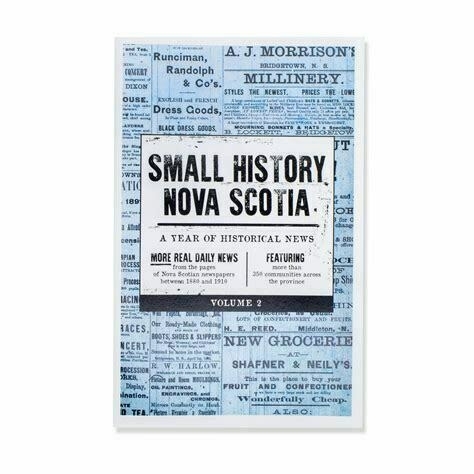
Small History Nova Scotia: A Year of Historical News, Volume 2

The second in a series of three pamphlets compiled by Sara Spike, with Volume 2 published in 2020. As she says in her introduction, the series “shares real daily news from [over four dozen] historical newspapers across the province between the years 1880 and 1910.” It also includes illustrations of old advertisements and notices, which break up the grey and add a lot of nostalgic charm to the package. You can view a sample page from volume 2 on the Small History Nova Scotia site.

Spike started tweeting these news items from rural and small-town newspapers in 2014. Twitter turned out to be a perfect medium, as she explains:

Local news columns were frequently long lists of short bits of news. The tweets, like the daily entries here, are entire news items just as they appeared in the original newspapers.

Here are a few examples:

  • The coast was enveloped in fog nearly all day. Yarmouth Jul 3 1893
  • The picnic on Moose Island consisted of baked beans, canned salmon, cake of all kinds, pie of every description, hot tea and coffee. Five Islands Jul 8 1895
  • Mr. Jon Vaughan has a cat that is rearing two young minks and a black kitten. Anyone passing may see the lithe forms racing about in a very happy mood with kitty as a frolicksome companion. Mr Vaughan has recently added a wood chuck to his menagerie. Gaspereau Jul 11 1890

Spike acknowledges that these excerpts exclude lots of voices and descriptions, but I agree with her that they do capture the flavor and texture of a specifically, almost intensely, local way of life.

On a personal note, I loved reading this booklet because it reminded me of my first real job out of college at The Rocky Mount Evening & Sunday Telegram in Rocky Mount, NC. At that time – 1984 – the Linotype machines were only recently consigned to the backrooms and the “women’s and features” page regularly consisted of one-paragraph summaries of the local women’s, civic, and church groups. (Try writing meaningful headlines for these squibs beyond “Club Met on Sunday”). We also ran odd little endearing notices like Mr. and Mrs. Smith will be on a cruise or traveling to meet their new grandchildren in Lompock, or whatever. (Burglars, take note!)

Reading these hundred-year-old Nova Scotia news items just made me smile and sparked my imagination for living in that place and time, the same locales that Millie of the Maritimes would have lived in. And they also put me in mind of my own early days, where that tradition of newspapering remained intact, though not alive for much longer.

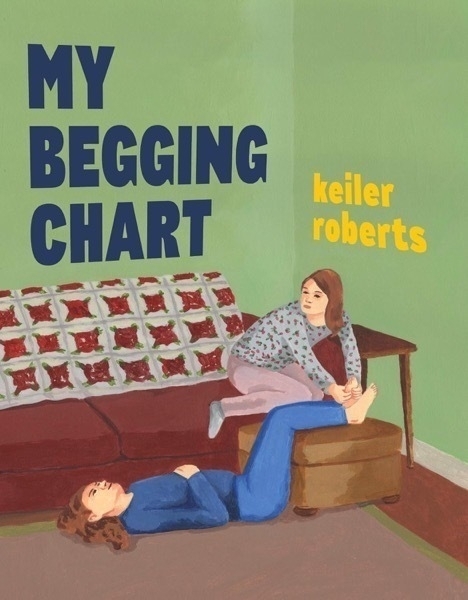
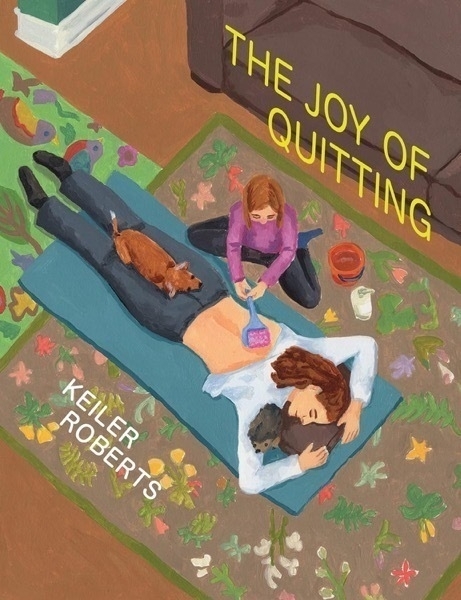
As a devotee of autobiographical comics, I’m ashamed to say I’d never heard of Keilor Roberts before this trip. But we’ve liked Julia Wertz’s comics, and I thought Liz might also enjoy Roberts’ deadpan and Sahara-dry wit.

And we did. These were fun books to drop into and encouraged me to seek out interviews with Roberts and pursue copies of her other work. Highly recommended, especially for her interactions and dialogues with her daughter Xia, who looks at the world as brightly and eccentrically as her oftentimes less-happy mom.

My Nova Scotia Books 5

๐Ÿ“š Purchased from a gift/souvenir shop in Chester, N.S. Sadly, I cannot recall the name and cannot find it in Apple Maps.

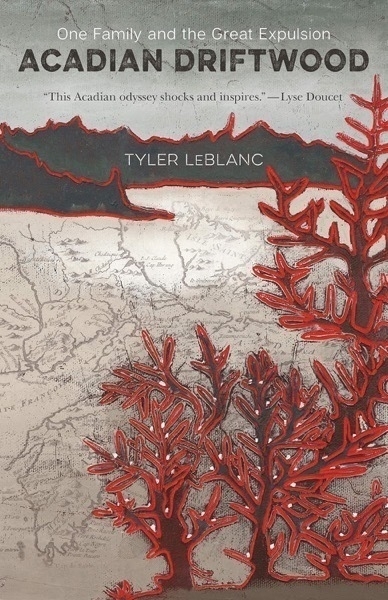
Of all the books I got in Nova Scotia, this was the most powerful. The Expulsion of the Acadians – also called the Great Deportation – which occurred from 1755-64, is one of the great scars of history on this beautiful place, perpetrated by the brutal British colonial government on a peaceful agrarian population whose crime was that they spoke French. The Expulsion echoes still in this region and its local culture.

There are a great number and variety of books on the topic of the Great Deportation; the Grand Prรฉ Visitors Center had books covering all aspects of the event, ranging from academic histories to fictional retellings. Longfellow’s poem “Evangeline” exists in many different formats.

But this book felt different. Acadian Driftwood, despite its slim profile, is packed with thorough research and scholarship, imaginative storytelling using the known facts, and a deeply personal exploration by its author, Tyler Leblanc.

Leblanc did not even know his ancestors were Acadian until he traced his genealogy back to Joseph LeBlanc (his great-great-great-great-great-great-grandfather). The book tells the separate histories of Joseph and his 10 siblings who were expelled from their homes and lands and quite literally scattered to the four winds. Each chapter follows the trail of an individual sibling, where they ended up, and how they possibly fared. Some of them died at sea, others who made their way to France, England, Philadelphia, and yes, Louisiana, and even some who hid out and escaped the clutches of the British soldiers. The book describes the type of life and living conditions Leblanc’s ancestors would have found in these unsafe and openly hostile environments, so different from the green and peaceful Acadia they had known.

A short, powerful book that tells you what you need to know factually about the Great Deportation and what you should know emotionally, personally, about how that event played out in these individual lives. And then ponder how the world treats refugees today and ask yourself: is it any better? Is it any different?

Acadian Driftwood - The Band - YouTube

Acadian Driftwood - Wikipedia (background on The Band’s song)

How Tyler LeBlanc looked into his Nova Scotia roots and uncovered a connection to Acadian history | CBC Books

My Nova Scotia Books 4

๐Ÿ“š Purchased from the Grand-Prรฉ National Historic Site Visitors Center. The Center has lots of CDs of Acadian and traditional music, and many books on Acadian history and culture, with a focus on the British government’s deportation from 1755-62 of the Acadians from Grand-Prรฉ. The Center also has lots and lots of versions and retellings of Longfellow’s “Evangeline,” which I really must get to one day.

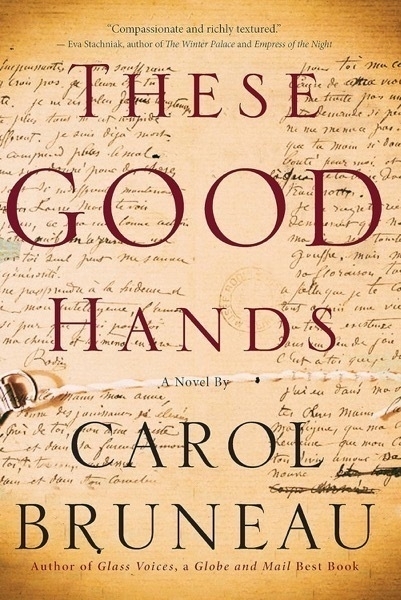
These Good Hands by Carol Bruneau

From the bookflap: “Set in the early autumn of 1943, These Good Hands interweaves the biography of French sculptor Camille Claudel and the story of the nurse who cares for her during the final days of her thirty-year incarceration in France’s Montdevergues Asylum.”

Still on my to-read shelf. I bought this early in our trip thinking I’d get back into reading a real book (by which I mean, a good novel). Even though the novel does not have anything to do with Nova Scotian or Acadian culture, I loved the description of the book from its flap and that’s why I bought it.

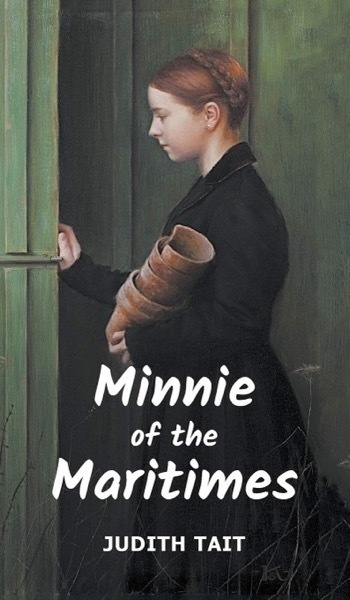
Minnie of the Maritimes by Judith Tait

Also not a book with Acadian themes, but it sweeps from one end of Nova Scotia to another, and is a fine first novel. The author’s bio on the last page says this:

Investigating her ancestors led to the fictional life of a real person, Minnie Healy, born in 1864 outside the village of Port Williams in Kings Co., Nova Scotia. No other details of her life were recorded.

Set in the late 19th and early 20th century, the book follows young Minnie as she is cast out from her family’s home. Her pregnancy has cast shame on her family in the community and so she is sent to Montreal, where she delivers the child in a Catholic-run facility for unwed mothers – who are not allowed to keep their children. From there, she lives on Prince Edward Island with her aunt’s family, marries and moves to Halifax, and then ends her days in Wolfville.

It packs a lot of incident for a short book, and there are tinges of melodrama here and there. But the descriptions of those times – along with vintage photographs of the era that help inform the book’s atmosphere – are bracingly physical with great details. Minnie’s train ride to Montreal, the cold stoniness of the Catholic facility, the summers and winters of PEI as she grows to young womanhood – there are so many lovely episodes that the book is a joy to read.

But it’s not just nostalgia for a lost time. I’d heard about the Halifax Explosion but Tait’s description of its aftermath, as Minnie wanders through a neighborhood scorched and scraped bare, was unsettling. The book may appear to be a cozy, but its report has claws.

A small book, maybe a minor book, but a perfect little gift of a book for anyone who loves Nova Scotia and wants to know what life 100+ years ago felt like.

Finished reading: Growing Pains by Emily Carr ๐Ÿ“š

The bedtime book I read to Liz before lights out. We knew nothing of Emily Carr; this was a used book I picked up in Annapolis Royal and it proved to be wonderful. Carr’s descriptions of her early life and her times in San Francisco and London as an art student are brisk and readable. She exhibited such strong character, and withstood such vicious and determined opposition from her family and neighbors, that her occasional lapses of collapsing self-doubt are really heart-breaking. That she powered through so much opposition to make her work and suffered several bouts of what she calls nervous exhaustion (but were likely heart attacks) make it easy to understand why she stopped believing in herself. Until the pictures she’d made brought the world to her door. A remarkable life and this – her last memoir, finished just before her death – covers the sweep of it with unsparing anecdotes.

FInished: "The Cursed Hermit"

Finished reading: The Cursed Hermit by Kris Bertin (Writer), Alexander Forbes (Artist) ๐Ÿ“š

A sequel to the duo’s previous The Case of the Missing Men though that isn’t strictly needed to appreciate this adventure. The story is not as bonkers as Missing Men but is still deranged and unhinged, with a deeper look at Pauline’s character. She showed hints in the previous book of second-sight, and she goes on a deep personal journey in Hermit.

Found myself going back to the beginning, going back to specific pages and sequences (that paint smudge over Pauline’s eye in the early pages! the kaleidoscope patterns!).

The art by Alexander Forbes is jaw-droppingly detailed and brilliant. I spent several minutes just studying the cross-hatching, shading, brushwork on the trees and cliff faces and rocky outcroppings. His landscapes and nature drawings have a solidly real look, while the fantasy images use that realism to unsettling effect. His character-acting is also great, especially during Pauline’s visions; the inhabitants of Hobtown all look dulled, dumpy, uncaring – and Bertin’s story explains why that is.

I don’t know how many hours and years it took them to create this book, but I will happily wait however long it takes for them to create another. This one really hit my sweet spot for comics, spookiness, character development (Pauline and Dana’s relationship felt real and caring).

Finished reading: Old Christmas by Washington Irving ๐Ÿ“š

Finished reading: Old Christmas by Washington Irving ๐Ÿ“š

A classic set of stories that invigorated the Christmas spirit in 1820s America, which saw the holiday as too-English (the war of 1812 was still fresh) and which banned celebrations in some locales. Irving synthesized his research into older English Christmas customs, games, and rituals into a fictional story of a grumpy outsider whose heart is warmed by the lightness and gaiety. He even includes a ghost story. Dickens was an Irving fan and drew from this book for his own โ€œChristmas Carolโ€.

It took a while for me to get into the style and pace of the writing, though judicious skimming helped and I did love the rich details.

What leapt out at me were the rather lechy old Master Simon who enjoys the company and attention of the pretty younger girls, and the clear and rigid caste system of gentry and peasants, which the narrator endorses (no one has a word of thanks for the busy kitchen staff who cooked all the extravagant foodstuffs), though he is aware of the class divide: his narrator looks sternly at some of the โ€œpeasantsโ€ knowingly playing up to the guvner.

Other reading, if you’re interested: