
“To allow oneself to be carried away by a multitude of conflicting concerns, to surrender to too many demands, to commit to too many projects, to want to help everyone in everything, is to succumb to the violence of our times,” wrote the wise Trappist monk Thomas Merton in the 1960s, long before the web, or BlackBerrys, or the first use of the word “multitasking” as applied to human activity. “Frenzy destroys our inner capacity for peace.” Were he alive today, he presumably wouldn’t have a Twitter account.
“The Taking of Pelham 1 2 3” is rated R (Under 17 requires accompanying parent or adult guardian). It has intense violence and frequent repetition of every true New Yorker’s favorite word.
Sleep, tossing of mind, attachment to objects, subtle desires and cravings, laziness, lack of Brahmacharya, gluttony are all obstacles in meditation. Reduce your wants. Cultivate dispassion. You will have progress in Yoga. Vairagya thins out the mind. Do not mix much. Do not talk much. Do not walk much. Do not eat much. Do not sleep much. Do not exert much. Never wrestle with the mind during meditation. Do not use any violent efforts at concentration. If evil thoughts enter your mind, do not use your will force in driving them. You will tax your will. You will lose your energy. You will fatigue yourself. The greater the efforts you make, the more the evil thoughts will return with redoubled force. Be indifferent. Become a witness of those thoughts. Substitute divine thoughts. They will pass away. Never miss a day in meditation. Regularity is of paramount importance. When the mind is tired, do not concentrate. Do not take heavy food at night.
If I hear one more person pontificate on how diabetes is TOTALLY avoidable, I will rip their living heart from their chest and eat it in front of them, saying to their glazing eyes, “THAT was totally avoidable, dumb-ass.”
Who needs alcohol and drugs when you have Tom Waits?
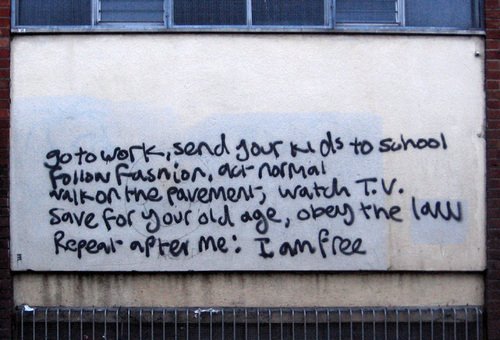
"Act normal"

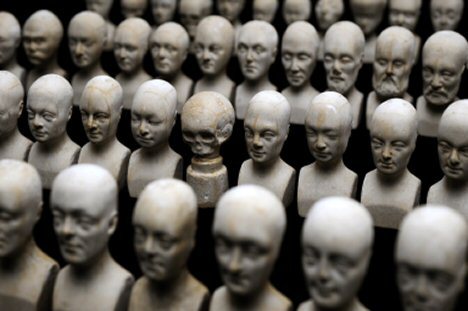
"What is the world's story about?"
In East of Eden, John Steinbeck writes:
‘A child may ask, “What is the world’s story about?” And a grown man or woman may wonder, “What way will the world go? How does it end and, while we’re at it, what’s the story about?”
I believe that there is one story in the world…. Humans are caught – in their lives, in their thoughts, in their hungers and ambitions, in their avarice and cruelty, and in their kindness and generosity too – in a net of good and evil. I think this is the only story we have and that it occurs on all levels of feeling and intelligence. Virtue and vice were warp and woof of our first consciousness, and they will be the fabric of our last, and this despite any changes we may impose on field and river and mountain, on economy and manners. There is no other story. A man, after he has brushed off the dust and chips of his life, will have left only the hard, clean questions: Was it good or was it evil? Have I done well – or ill?’