“To achieve great things, two things are needed: a plan, and not enough time.”
Leonard Bernstein
“To achieve great things, two things are needed: a plan, and not enough time.”
Leonard Bernstein

Finished reading: Early Autumn - A Story of a Lady (Read & Co. Classics Edition) by Louis Bromfield 📚via Serial Reader.
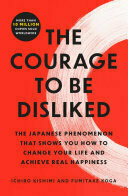
Finished reading: The Courage to Be Disliked by Ichiro Kishimi 📚 on Derek Sivers recommendation. Good intro to Adlerian psychology, which doubles as a sensible philosophy of life.
Key takeaways:
More than a guidebook for aspiring wizards, Magic is also a veiled theory of religion. According to Henry Evans, whose introduction performs a kind of historiographical sleight of hand, spiritual miracles, paranormal experiences, and occult occurrences in ancient times point to a forgotten pre-history of modern stage magic. “Weeping and bleeding statues, temple doors that flew open with thunderous sound and apparently by supernatural means, and perpetual lamps that flamed forever in the tombs of holy men”, believes Evans, “were some of the thaumaturgic feats of the Pagan priests.” (Two hundred pages later, in Book II, Hopkins offers detailed schematics of “temple tricks” designed by the Ancient Greeks, discussing Heron of Alexander’s description of the Triumph of Bacchus, a mechanical shrine with self-moving figurines, and the dicaiometer, a jug that magically poured a perfect measure every time.) In the Middle Ages, continues Evans, the frequent reports of phantoms were a by-product of improvements in optics, for magicians with concave mirrors “were able to produce very fair ghost illusions to gull a susceptible public.” Witches burnt at the stake during the Enlightenment, he intimates, may have been magicians fully committed to their trade.
Source: Magic: Stage Illusions and Scientific Diversions (1897) – The Public Domain Review
Another important part of the Candlelight story line is the culinary tradition. Servants worked tirelessly to prepare elaborate dishes for the governor’s table.
“As you read through cookbooks of the time period, you start figuring out, Oh, so this is going to take a very long time,” says Matt Arthur, Tryon’s living history program coordinator. “We think a gelatin dessert is easy; it’s just a box of Jell-O and boiling water. Back then, they were boiling calves’ feet, going through a purification process, using bladders of freshwater fish and deer antlers. It took a long time to do all of that.”
Arthur considers any 1700s recipe that involves gelatin to be a “power flex.” Those dishes demonstrated to the governor’s dinner guests that he had enough servants to pull off such complicated recipes. Food was a way for people of stature to show how wealthy they were without saying it.
One of my favorite Kliban drawings: Barf Bold, a Decorative Typeface
The Daily Heller: The Newly Inflated Career of Tony Sarg – PRINT Magazine
Before humans stored memories as zeroes and ones, we turned to digital devices of another kind — preserving knowledge on the surface of fingers and palms. Kensy Cooperrider leads us through a millennium of “hand mnemonics” and the variety of techniques practised by Buddhist monks, Latin linguists, and Renaissance musicians for remembering what might otherwise elude the mind. Source: Handy Mnemonics: The Five-Fingered Memory Machine – The Public Domain Review