As Stephen Fry said once upon a time: when I was young, comedy albums were my rock albums.
The first albums I remember buying were remaindered copies of "Another Monty Python Album" and, rather incredibly, Robert Klein's "Mind Over Matter" (I think because the cover just looked so out-there).
Since then, comedy has always flickered in the background. I've been interested in comedy as a performer (when I acted in college and community theatre, it tended to be in comedies), as a consumer (watching classic sitcoms via Netflix is quite relaxing ["Wings" is my current before-bedtime snack], "The Big Bang Theory" reruns are fun to watch while eating supper, and the Flying Karamazov Bros. are funny as hell), and as a writer/critic (what was Bill Hicks up to? what the hell is Dan Harmon doing with those bloody circles? how does telling three mini-stories in a single Big Bang episode change the viewing experience compared to a 1977 Mary Tyler Moore episode that focused on only one story for 25 minutes?).
As you can tell from that last paragraph, I have a sort of engineering relationship with comedy. I love reading about what makes comedy work. (Disclaimer: I've never written any skits or humor pieces.) If you see me watching a sitcom or standup special, I may nod, smile, occasionally bark out a laugh. Thing is, what I'm mainly doing is studying the structure, trying to guess where the joke is going, and also kind of watching it like I'd listen to an orchestra -- keeping an ear out for the unique sound or the pattern that's holding everything together, while remaining open to be surprised and delighted.
Over the last few years, I've been reading about comedy and comedy writers (And Here's the Kicker is great place to start), listening to comedy writing podcasts, and particularly enjoying James Cary's blog, "Sitcom Geek."
Cary set his sights on being a comedy writer long ago, writing shows for the Fringe festival, radio skit programs, sitcoms for radio and TV, and more. I enjoy his take on the writer's life from the British comedy writer's point of view, which is not all that different from any other writer's point of view: work hard and you may be rewarded but it's more likely you won't be, so keep working, get better, and try again. And his views on what makes a sitcom work or not work, appraising classic shows and modern alike for what they do that's worth noticing.
My favorite kinds of posts are when he praises the work of those he admires: this tribute to Bob Larbey, who co-wrote on our favorite sitcoms, "The Good Life," was tremendous fun to read. (That photo of Larbey makes him look like a mashup of Jay Leno and Marty Feldman.)
My other favorite posts of his are when he talks about the business of sitcom (the state of the industry, the primacy of hard work and solving problems, incremental improvements, advice to young writers) and the structure of sitcom (characters, plot, theme, research, performance). As someone experienced in the business, he's great at pointing at a comedic success while saying, "Look, did you see how long it took them to devise that concept? How long it took them to write it?" He's also pretty frank about not holding on to sour apples or grapes: if the BBC passed on your script but accepted a script almost exactly like it, it doesn't pay to kick up a fuss. Maybe their script was better, cheaper, hit the accepting editor on a good day -- it doesn't pay to get too up in your head and resentful about this business. Get back to work, figure out your characters' motivations, bring the funny. In other words: Keep writing.
His post "Theoretically Funny" is a great example of the kind of post I just eat up. These aren't templates for writing stories; if anything, they may be more helpful as ways to diagnose why a particular kind of story is going wrong. But they show the bones, the structure, the logistics of a particular kind of storytelling that not only has to make an emotional impact on a viewer, but also deliver a laugh every 20 seconds.
One of my long-term listening pleasures is BBC4's In Our Time podcast. The show is hosted by Melvyn Bragg, a novelist, cultural reporter, broadcaster, and a member of the House of Lords, in no particular order.
The show's premise is to pick a significant topic from history, culture, science, art, philosophy, etc., bring in three scholarly or scientific experts on the topic, and let Lord Bragg serve as the audience's guide and interlocutor. Bragg's job is to absorb lots of detail (written and prepared for him beforehand by the week's guest experts) and then attempt to lay out the topic from end-to-end for the eager-to-be-informed listener. All in about 43 minutes, which makes it fast-paced with lots of finely argued details and centuries of stories regretfully brushed aside or glossed over in an attempt to get out of the studio on time.
Still, that's about the right length of time for an introduction to a big topic. It sounds like a frantic idea, to discuss Prime Numbers, the Nicene Creed, Montaigne, Renaissance Magic, or the Battle of Bosworth Field in under an hour, but I have to admit, Bragg delivers more often than not. (Take a look at their archives; the variety of topics is astounding.) He favors a strictly chronological narrative both to establish a context and structure the discussion, and is careful to make sure a decent foundation is laid before the more interesting aspects of the topic are discussed.
As someone who loves to learn new things and who particularly enjoys these kinds of scholarly panel discussions, I enjoy getting a condensed introduction to a topic or idea I know nothing about. I often want a taste, not a full meal. "In Our Time" delivers that.
And it's lovely hearing the experts talk. While some of the voices sound like particularly eccentric Monty Python characters, it's bracing to hear younger voices, women's voices, and ethnic voices taking their place at the table. These folks know their stuff and the deference they pay to each other is charming.
But you knew there was a "but" coming. For all that Bragg ably herds his cats, he has habits that make me want to scream. For someone whose day job is as a broadcaster, I'm often shocked by his lazy elocution and gabbled, hurried, mumbled words. He has an annoying habit of literalness; under the guise of "getting it clear for the listeners," he tries to pin down whether Pocahontas actually did save John Williams' life and did King Arthur and Robin Hood really exist, all while his experts squirm in their seats after having already said five times that there's no hard evidence one way or the other.
While I'm on a Bragg-bash, I sometimes get annoyed when the topic is literature. As a novelist and a great reader himself, he often inserts his opinions and summaries into the conversation when I believe they don't add much to the conversation. However, when the topic is well outside his familiarity, he becomes more humble and capably guides the experts through a forest of dense ideas. He's at his best when he lets his guests talk.
After the show, he and the experts usually repair to a lounge for a cup of tea where the conversation continues, one assumes more free-spiritedly, and they lament all the good bits that had to be left out. He shares choice tidbits from these conversations in his weekly newsletter and a Radio 4 blog.
I enjoy these morsels he shares in his weekly posting; more admirable and humorous qualities of his character peek through. Here are some paragraphs I enjoyed from his post accompanying a show on the gladiator Spartacus:
Mary Beard told me after the programme that Crassus (he who said that no man can count himself rich unless he can afford a private army), the one who finally defeated Spartacus, had taken on the Parthians and himself been defeated. His head was severed and later used as a prop in a performance of The Bacchae at the Parthian court. A story like that is what I think, perhaps many of us think, classical historians are for.
The business of gladiators being killed in the arena and a great flurry of thumbs down going on seems to be ill-founded. Put simply, gladiators were very expensive. They were an investment. Their owners did not like them to be killed and therefore, of course, as privileged, rich and wealthy owners do, they fixed things so that they got what they wanted. So in the end gladiators were as much for show as for dead meat.
There was a discussion about whether Spartacus's wife could possibly have spent time with him in the gladiatorial school, i.e. lived with him. She certainly seems to have been there when he was bought as a gladiator in the first place.
Curious how we seem to like men fighting each other or lions, bare-topped, shouted on by crowds. But it wasn't long ago that much the same thing happened around these parts, is it? Crowds at hangings, crowds at bear fights, crowds at executions, women knitting as the guillotine fell. How much would it take for it to come back?
The Durham Country Library -- which is a great organization I support with patronage and donations of both books and money -- does not notify me when books are either coming due or are overdue. This can be inconvenient when life gets hectic or I forget that the checkout period for DVDs is different from that for books. If you don't have a system set up to remind you about such things, then it's all to easy to forget when they're due.
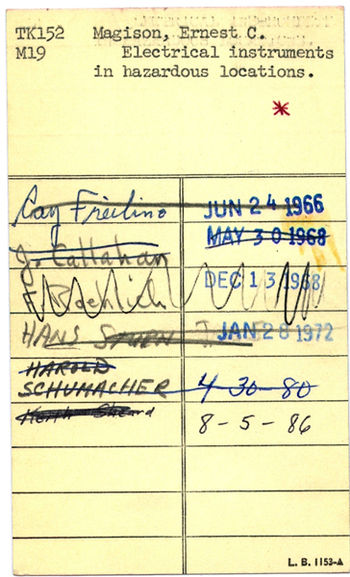
Enter Elf (from its About page):
Elf is a web-based and email tool for library users to keep track of their library borrowings. Elf is like a personal assistant, whose task is to help with keeping track of what one has on loan from the library.
Designed with the busy or avid library user in mind, Elf is ideal for families with multiple library cards or for individuals (writers, researchers, students, readers, etc.) who have cards from different libraries.
Elf makes it easier to keep track of what's due, overdue or ready for pickup from one or more library accounts. Users have the option to consolidate their library accounts into one account if they wish. This account is checked everyday and email notices are sent when items are coming due, overdue or when holds are ready for pickup. As well, get up-to-date realtime information by browser.
How many people knew about Elf before I did? Probably everybody, I bet. And not a word from any of you! I only discovered it by happenstance, through the weekly Back to Work newsletter.
Durham happened to be in its list of libraries, and I eagerly signed up. I set the level of advance notice I want to receive (3 days) and provided my cell number so I could be texted also. Elf also offers RSS and iCal feeds if you prefer to be notified that-a-way.
It's a terrific service, it's free, and it's simple to figure out. If you use your library card a lot, you should check out (heh) Elf.