On one of my last visits, even as my father was in severe pain, he asked me the same question he always did: What are you reading?
I fluffed my feathers a bit and said: Kierkegaard. “What is he telling you?” asked my dad. I had just been reading a volume of Kierkegaard’s journals on the train, immersed in the poetic ruminations of the great Danish philosopher. So I immediately spouted, verbatim and with the appropriate pauses for world-weary effect, the words I still remember to this day: “No individual can assist or save the age. He can only express that it is lost.”
Without a moment’s hesitation, my dad retorted: “He’s right. But that’s exactly why you must try to assist and save the age.”
In that one moment, my dad put a callow youth gently in his place, out-existentialized the great existentialist and gave me words to conduct a career by.
More and more I feel that, just as all art aspires to the condition of music, all humour should really aspire to the condition of Wodehouse.
WordPress or SquareSpace?
#I've been contemplating a new blog project to keep myself busy and out of mischief. Instead of just pouring new stuff into this blog, which is more of a scrapbook than anything, I decided to start a separate, self-contained offshoot blog that would hold its contents. This caused me to learn a bit more about how to steer this site, such as how to add a subdomain. It also made me think about how I wanted to visually separate the Brownstudies personal blog from the new blog (also personal, but subject-specific and finite) (details to be announced when I'm good and ready).
And as I thought about how this blog looks, I had to confess I'd also gotten rather tired of the Barthelme theme I've been using since the blog started up in '06 or '07. It's been a great theme, and I chose a minimalist design specifically because I like the aesthetic and I wanted the focus to be on the words. From a tech standpoint, I wanted to fiddle as little as possible with the code driving this theme and so I've done little to tweak its looks or functionality. Getting too deep into the customizing and coding of these free themes can lead to WordPress updates not installing. Also, the Barthelme theme has not been updated for over two years so there is a question of how long this free lunch will last.
In looking at the landscape of WordPress themes, my god, are there lots of them out there. And truthfully, one could get lost playing around with the WP dashboard where the look and behavior of the blog is configured. Add to this, in addition to the yearly cost of my site and domain name, I'd have to buy a framework and child theme if I wanted to be assured of a stronger functional foundation and more flexible design choices. (The framework is the programming scaffolding while the theme controls the colors, fonts, and other styling visuals; the Barthelme theme, and most all free WP themes, conjoin the two into a single -- sometimes fragile -- entity.)
So instead of wandering through that forest, I wondered if there was maybe an easier route to a new blog look.
Last year, I helped my friend Mike Uhl set up his own blog and web site on SquareSpace. It's a great way for someone new to the web to set up and start their own web site -- the site is hosted on the SS servers, you get a free custom domain name, they offer technical support, their drag and drop interface makes building a site easy, and their template library makes changing the look of the site dead simple. Depending on your needs, you may pay a little more per month than if you hosted a WP site on your own server, but when you add in the cost of a WP framework and child theme, the costs are pretty similar.
The informal comparisons I read of the two systems painted them as Mac (SquareSpace) vs. Windows (WordPress). Either operating system will let you do what you want to do, but you have to decide how much of a hobbyist you want to be. And no matter which you choose, there will be a learning curve.
I spent most of last week reading blog posts and review articles on the merits and demerits of both products, with about an even number of blog posts documenting how and why the writers were switching from WP to SS and vice versa.
WordPress is complicated, not suited for beginners, offers solid performance, is endlessly customizable and easy to mess up because of that, has a ton of eye-catching themes and a few reliable frameworks, the WP plugins let you extend your site's functionality and usability (as long as you don't use too many of them) and it works just the way that writer expects it to work.
SquareSpace is easy to use, solid unless you start writing your own CSS, with tech support that's good when they know the answer but poor if they don't, beautiful templates that all kinda look alike (but also work alike and behave reliably), is much easier for the non-techie photographer to set up a portfolio, offers limited widgets and plugins but they work without making the site fall over, and it works just the way that writer expects it to work.
It was obvious to me that the differences between these two systems were, as they say, as fine as a frog's hair. So there was no clear winner, in my mind. I must needs therefore gather more information!
I started a 2-week free trial of SS, which is a great deal, as you can't do that with the expensive WP frameworks and themes. And I didn't want to be fooled by the sunk costs fallacy: even though I'd been using the WP blog for years, that did not mean I had to keep using it if there was a better option.
So, I created a couple of pages, a blog, poked around the options, and, honestly, the SS dashboard looked as intimidating and bewildering to me as the WP dashboard. So, for me, the "best" system was not going to be decided based on ease of use.
At this point, after a week of mulling it over, it hit me: this decision was becoming a procrastination distraction. Yes, changing my blog's look was something I wanted to do anyway, but I was letting it take over my attention cycles. And, as my old coach used to say, indecision causes suffering.
What was also happening was that I wasn't doing the writing I wanted to do, because writing is hard. But this tech stuff ... promised an answer. If I got this choice right, everything else would fall into place. But of course it wouldn't and I could see that.
So, the question was not "which system is better," because that is essentially unanswerable. Based on my reading, the real answer is a matter of opinion based on what you value in blogging software.
The question for me instead was "which option will cause me the least disruption?" Either option would turn my world upside down, but which one would get me up and running a little more quickly? For me, the answer to that question was to stick with WP. It's worked reliably for me so far, and buying a reliable framework/theme combo would simply give me more options. I also would not have to export my blog posts, set up redirects, etc. thinking of which always made my stomach hurt.
So, I decided that the best theme for someone like me (technically competent but clueless when it comes to PHP, CSS, and WP internals) seems to be the Genesis framework with the Prose theme. Yes, it looks rather familiar. As the poet says, the end of all our exploring is to arrive where we started.
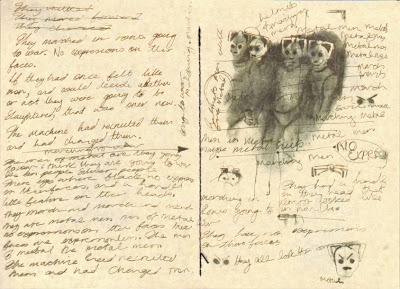
(via Philip Sandifer: Writer: There’s Another Way: Throw Away Your Guns (The Family of Blood))

(via ‘How Dare It Make Me Feel So Much’: The Spell of F. Scott Fitzgerald - Joe Fassler - The Atlantic)

(via All LinkedIn with Nowhere to Go | Ann Friedman | The Baffler)

(via Facebook Feminism, Like It or Not | Susan Faludi | The Baffler)

(via Famous Authors’ Handwritten Outlines for Great Works of Literature – Flavorwire)
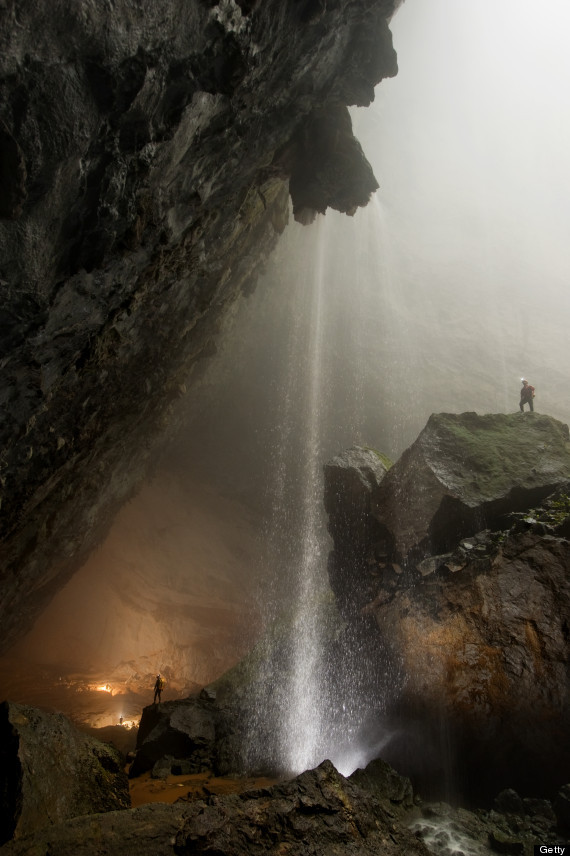
(via World’s Largest Cave, Son Doong, Prepping For First Public Tours)
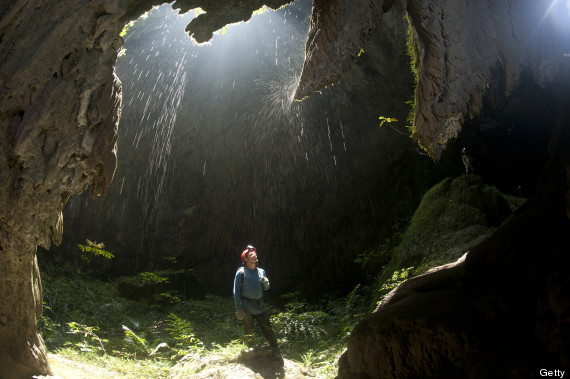
(via World’s Largest Cave, Son Doong, Prepping For First Public Tours)