
(via World’s Largest Cave, Son Doong, Prepping For First Public Tours)
(via World’s Largest Cave, Son Doong, Prepping For First Public Tours)
You can easily go too far with all this talk of meaningfulness: that way lies acres of self-help nonsense about Finding Your Life Purpose and “doing great work”. But Graeber’s analysis suggests a more down-to-earth question for navigating the world of careers: is the job you’re doing, or applying for, one that the world would be perfectly fine without? (Financial necessity might still oblige you to do it, but at least you’ll be acting without illusions.) As life strategies go, this seems a decent one: where possible, move in the direction of non-pointless activities, and away from those that reek of bullshit. Do stuff that people would miss – however slightly – if it never got done at all.
To get this out of the way as quickly as possible: Cate Blanchett clocks an amazing performance as Woody Allen's Blanche DuBois in this utterly unsurprising and tiresome movie. Oh, and there's a great soundtrack -- I'm definitely buying the soundtrack. As with Allen's "Midnight in Paris," the soundtrack is more entertaining than the wretched movie from which it is hellspawned.
Frame by tooth-grinding frame, “Blue Jasmine” demonstrates nearly every tic of Allen’s that infuriate me:
By contrast, Sally Hawkins' small apartment that she shares with her two sons is small, cramped, cluttered, and plays host to her boyfriend's crew as they watch boxing. Jasmine is suffocated by the cage-like atmosphere -- though, golly, it looks a lot more homey than the places where she used to live. The lower-class men all talk like Andrew Dice Clay (or like bad imitations of Brando's Stanley). Every character is either refined or tawdry, and their intellectual speeds barely register on the dial -- they all seemed to finish at the place where they started.
Of course, of the upper- and lower-crust characters, who do you think will end up happy?
The folks I saw the movie with were surprised by the downbeat ending. I was surprised that they were surprised. To my eyes, absolutely nothing I saw unfold was unexpected.
Cate Blanchett sells her part with conviction, courage, and desperate energy -- her final scene is unglamorous and riveting. But I think she's the one who sells the ending, rather than the thin, insubstantial, and lazy script. Allen's movies more and more seem removed from real life, which is OK, if the world you're creating is involving or the characters you're creating are interesting people I've never seen before. But his movies seem to be recycling characters and tropes from previous Woody Allen movies, which I think yields little real emotional or artistic value.
I want to tell him to please take off a year or two, spend time with his kids, read some new books, soak up some new experiences, and let his ideas germinate longer before he starts up another production. Please.
The last good movie of Allen's I enjoyed was "Crimes and Misdemeanors," which I think is probably the high-water mark of his dramatic films. The recent documentary on Allen by Robert Wiede is also quite good, especially on his early career, his influences, and his enviable work ethic. And check out Cate Blanchett's turn -- or turns -- in Jim Jarmusch's "Coffee and Cigarettes" -- it's a lark, and she has fun sending up her image.

“Fuckin’ endings, man,” Get Shorty concludes. “They weren’t as easy as they looked.” When Elmore Leonard died this week, the Mozart of profanity, the Cole Porter of the word “motherfucker”, he left the world as easily secure of a lasting reputation as any novelist in history. What makes a novelist last is the music they make – not their social concern, not the importance of their subjects, not the utterances they make. PG Wodehouse has lasted where AJ Cronin faded. Silliness, absurdity and the utmost triviality are no barriers; novels about nothing more than the squire’s daughter marrying the squire’s neighbour last forever, if they sing.
A quote from the Mark Forster forum:
My goal is no longer to get more done, but rather to have less to do.
The first book ends where I’m like, this fucking sucks. And I wanted – it’s like, for better or worse, this stuff recedes and doesn’t rule your life after a while. And that’s part of what is so sad. Honestly, that’s one of the saddest things, when you’ve gone through it. When you realise you’re getting over it, and you don’t want to get over it.
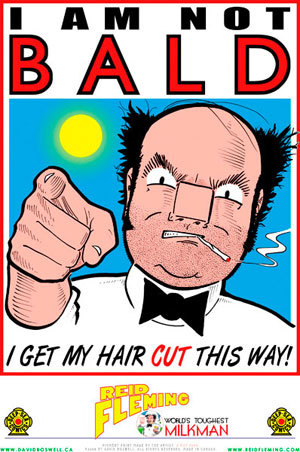
(via The Tyee – The East Van Artist Behind a Cult Cartoon Milkman)

(via The Tyee – The East Van Artist Behind a Cult Cartoon Milkman)
Krishnamurti went on to give countless talks at which he frequently implied that his audience shouldn’t be wasting their time listening to spiritual talks.
But perhaps the most striking was a 1977 lecture in California. “Part-way through this particular talk,” writes Jim Dreaver, who was present, “Krishnamurti suddenly paused, leaned forward and said, almost conspiratorially, ‘Do you want to know what my secret is?' ” (There are several accounts of this event; details vary.) Krishnamurti rarely spoke in such personal terms, and the audience was electrified, Dreaver recalls. “Almost as though we were one body we sat up… I could see people all around me lean forward, their ears straining and their mouths slowly opening in hushed anticipation.” Then Krishnamurti, “in a soft, almost shy voice”, said: “You see, I don’t mind what happens.”
When Tom Waits was inducted into the Rock and Roll Hall of Fame, he said, "We all love music and we want music to love us, too." It's a thought that haunted me after watching the glorious documentary 20 Feet From Stardom.
The movie starts on a sunny note as a trio of backup singers reunite after not having seen each other for decades. The tracks of songs they sang are played underneath, and you notice the names of different girl groups appear for each song. Their voices were everywhere, it seems, but they remained anonymous.
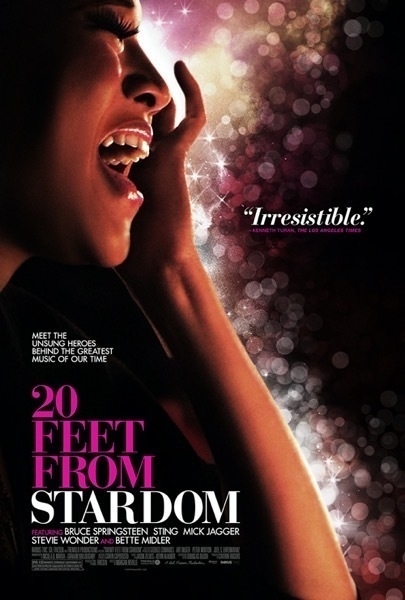
"20 Feet" tracks the fortunes of several singers from the first generation of girl backup singers. The first half of the film is fun, vibrant, and star-studded: the girls sing backup for the big names of rock and roll, with occasional solo duties on the records or duets with the stars. Mick Jagger, Bruce Springsteen, Stevie Wonder, and Sting contribute both raves for the singers who work with them and grounded, thoughtful perspectives on the life of a backup singer and why stardom sometimes eludes them.
Because, make no mistake, these singers gave everything they had to music and -- not without reason -- they'd like something back. As the girls grow into women, and the '60s become the '70s and the '80s, their attempts to crack the mainstream become more and more futile and their feelings about music turn bitter. The movie becomes heartbreaking by slow degrees. There's a particularly disquieting moment when the camera pans down a stack of solo albums by backup singers who saw these records as their ticket to mainstream success -- none of which were successful.
Did they not work hard enough? If you love something enough that you give up your life and youth for it, isn't it supposed to pay off? Where's the line between persistence and banging your head against a wall? Or is it also, as Sting and Springsteen say, a matter of luck, circumstance, and a thousand other variables that no one can control? The up-and-coming singer Judith Hill, who was all set to break out into superstardom, suffers with a tragic setback that she could not have planned for or even imagined. The movie follows her as she continues trying to execute her solo career, while also accepting backup jobs when she has to or wants to.
One of the profiled singers, Lisa Fischer, is at peace with her life as a backup singer. She knows the price big stars pay for their stardom, and she's happy that she never paid it. The occasional moments of her singing solo showcase a deep, jazzy voice; the respect that the other artists in the movie have for her and her voice are strong and stirring. She may not be out front, but she's never taken for granted.
The movie, however, belongs to two women: Merry Clayton, a powerhouse singer with a "kill spirit" who worked single-mindedly to become a star and who still feels the frustration that her dream eluded her, and Darlene Love, whose voice was used in dozens of hits produced by Phil Spector, who cruelly exploited her talent. Darlene's story has a happy ending, of sorts, but I could not shake the story of her years away from music and how narrowly she missed the chance to be welcomed back into its arms.