
"Merry Christmas from the Kensingtons"
My friend, the novelist Lewis Shiner, has a new Christmas short story up on the Subterranean Press site. It's titled "Merry Christmas from the Kensingtons" and is Lew's own Christmas ghost story -- particularly the ghosts of Christmases past as lived out in a series of annual family photo postcards.
![[ C ] Joseph Cornell - Penny Arcade (1962)](http://farm6.static.flickr.com/5137/5498928968_bf62a28f39_m.jpg "[ C ] Joseph Cornell - Penny Arcade (1962)")
It's a haunting story, and in reading just the simple descriptions of the family members as they age and grow, I found myself writing each person's lifestory in my head.
Lew said he had bought such a stack of family photo postcards at a flea market and the images, showing each family member growing older and with their personalities inevitably peeking through, year after year, haunted him.
I share his fascination and deep imaginative involvement with found objects. I've always found art installations made from found objects more interesting than other types of sculptures, for example. I also enjoy such items as densely collaged artwork and Cornell boxes; contemplating the original objects and sorting out my reactions to them, and then to their new associations and relationships within the artwork, can keep me staring for hours.
The power of Lew's story -- and of those found images -- shook loose a memory from my own mental lumber room of when I cleaned out the attic of our rental house before moving to our current home.
Artists don’t talk about art. Artists talk about work. If I have anything to say to young writers, it’s stop thinking of writing as art. Think of it as work.
PADDY CHAYEFSKY

Shadows of things that Will be, or shadows of things that May be?
Then Scrooge has some bad gravy, a nightmare about three ghosts, and he spends Christmas Day in a hysterical fit sending turkeys all about the city and giving everyone raises. He’s so happy not to be dead (as the third ghost suggested he soon would be) that he has a chuckling fit and bursts into tears, perhaps having gone insane. An unbelievable asshole but a day ago, Scrooge is now the picture of human kindness.
I, for one, don’t buy it. Despite Dickens’ assurance to the contrary, I think Scrooge came to his senses a few days later and started busting balls again. Tiny Tim died. No way he could have survived.
Later in life [Anthony Burgess] asked an American conductor to explain what makes English music English. The American answered, “Too much organ voluntary in Lincoln Cathedral, too much coronation in Westminster Abbey, too much lark ascending, too much clodhopping on the fucking village green.”
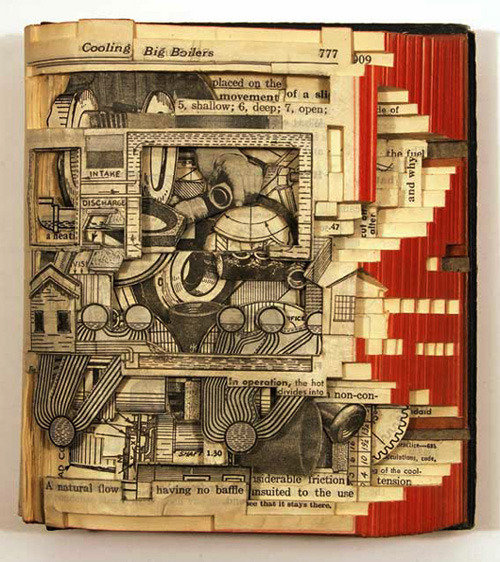
We Humans Can Never be Satisfied - Art De Vany on Line
We humans can never be satisfied. Nor could satisfaction rest on a specific accomplishment or object. I think that it comes from the fact that we humans must be supremely adaptive. That means we must have a kind of generalized, non-specific attraction or yearning for more that can be applied to novel situations. If we were attracted to a few things only, how would we deal with choice and adaptation when we are confronted with something completely new?
Humans must always have a kind of unfulfilled need or yearning for “something more.” Nothing can fully satisfy us or we would not be prepared to make choices in the next novel situation. It is the unpredictable that we must be prepared for and this requires an open-ended attraction or yearning for “something more”. The general feeling that there must be something more to life keeps us open to the next situation. For that reason, we can never be fulfilled.
To be fulfilled means the journey is over. We have to love the journey, not where it ends.
We Humans Can Never be Satisfied - Art De Vany on Line
Source: http://sharpsuits.net/Home
