Apart from Stevereads and the Ihnatko Alamanac have to say on the matter, I have paid no attention to the DC Comics reboot of its entire line of superhero comics. So when I see references to it in the mainstream press, I pay a little more attention.
The latest news is that Superman and Wonder Woman are now going to be the ultimate power couple. (The Guardian article has good links to related sites if you want more info.)
Writing Lois Lane out of Superman's romantic mythology just seems ... weird. Like setting Tarzan in Alaska. How can you turn your back on over 75 years of all that history? I'm sure they'll bring Lois back in somehow, and this lets the new writers cut loose on creating some new mythologies, but still ... There's something mysterious and seductive about an alien humanoid with godlike powers falling in love with an aboriginal female of a primitive species. Call me an old curmudgeon who hates change.
That said -- today's classic reading on the topic is Larry Niven's hilarious essay, "Man of Steel, Woman of Kleenex," and that title tells you everything you need to know. The gross-out implications almost write themselves, don't they? Sit back, relax, and prepare to snort into your morning coffee.
My key pop music memories primarily imprinted themselves on my trembling consciousness at after-show theater parties when I was an undergrad in the early 1980's. The hot items were Michael Jackson (back when he was good), J. Geils Band, Van Halen, Wham!, Pat Benatar, and tons of other bands whose names I don't know but whose songs were pounded into my head by Pop-40, MTV, other music video shows, and all the rest of it.
I remember them as being upbeat, lively, fun to dance to, and to shout over. I lost touch with pop music in the late ‘80’s and began more of an eclectic self-education in music I liked because I liked it, not because it was playing all the time everywhere.
But if it seems to you that the songs of today don’t have that same kick anymore, then science has confirmed your intuition. The BPS Research Digest summarizes an article from the Psychology of Aesthetics, Creativity, and the Arts proposing that pop songs have indeed become more sad and more emotionally ambiguous. Here’s the paragraph that caught my eye:
Unambiguously happy songs like Abba’s Waterloo sound, to today’s ears, “naive and slightly juvenile”, the researchers noted. And whilst modern songs in a similar style, such as Aqua’s Barbie Girl, can still enjoy huge commercial success, they’re usually seen as a guilty pleasure and savaged by critics.
I will at some point have to decide whether I can accept my pleasures as pleasures and to hell with guilt and shame.
Well, in that spirit, why not go out with one of my faves from that happy, happy time? I remember buying the 45 for this song because it had a great beat and just sounded like a fun record. I would sometimes listen to it after a hard day at my first job as a reporter for a smalltown newspaper. I put this 45 on, flopped on my sofa, and tried to draw in its energy and pulse, like it was caffeine. (This was before I started drinking coffee.) The video is meh but I recall it made a big splash when it appeared. Another sign of the changing times.
When I first saw an Asheville CD store saleskid flip open the hinges of a CD case to remove that annoying sticker from across the top of the lid, I was gobsmacked. Once I saw it, it seemed so simple -- why had no one ever shown me this before? Why had I not been able to figure it out on my own? (Part of my surprise being that I'm a notorious rules-follower and it's obvious, isn't it, that you don't take something apart unless someone told you it was OK?) The Proper Discord blog posted a great little video tutorial on how to unwrap the cellophane packaging from various types of CD cases. It's little bits of knowledge like this which makes life on the Interwebz worth living.
If we really want to understand our fellow human beings accurately, we must allow them to surprise us, to contradict what we think we know about them. Like good scientists, we should cling to our theories about people only loosely and always be willing to revise them in light of new data.
Transferring the renamed images to the Kindle Touch
I won't go into exorbitant detail on how I did what I did, but this post will pull all the steps together into one place so I have a record of what I did in roughly the order I did it, in case I need to do it again, God forbid. I also throw in a few stray observations along the way.
Jailbreaking the Kindle Touch
"Jailbreaking" is such a harsh word for what Wikipedia more delicately refers to as "privilege escalation." The Kindle Touch (also referred to as the Kindle 4) has been slower to fall to jailbreaking and custom hacks, but entropy catches up with everything.
In Pathfinder, use the Edit>Select... dialog to select all JPG files.
Right-click on the selected files, select Services>Convert to PNG. The Automator workflow takes the JPG files as input, churns away, and creates PNGs with the same filenames in the directory.
Select all the JPG files again and then move or delete them. So we now have a directory full of PNG files.
Starting from the top of the file list, use Pathfinder to view each file's Info and check the dimensions. I used Pathfinder's drawer for this part, which showed both a preview of the image and its attributes. About two-thirds of the files were in the proper 600x800 format. When I found a file that was not, I selected the file and ran a Keyboard Maestro macro that opened the file in Preview, entered new dimensions of 600x800, and then saved the file.
So, after another few minutes, I had a directory of files in the required format and size.
Grouping and renaming the images
There are two more constraints on image files for the Kindle.
First constraint: The screensavers directory is limited to a maximum of 99 files. I had collected a little over 200.
I decided I wanted a few different sets of files that I could switch out every now and then when I got bored with the current set. So I broke the files into 5 directories of roughly 40 files each. To ensure I had a fairly even, yet somewhat random, collection in each set, I used the Finder's color labels to help me visually differentiate files into various stacks.
In Pathfinder, starting with the first file, I gave every 5th file a red color. Then green after red, then blue, and so on. I then used Pathfinder's Edit>Select facility to copy all the red-coded files to a "red" folder, all the blue-coded files to a "blue" directory, and so on.
Great -- I now had five groups of files reflecting a mix of styles and images. Not boring!
Second constraint: Filenames. Here's what the simple screensaver readme has to say about them:
Each image MUST be named bg_xsmall_ss##.png, where ## is a two digit number from 00 to 99
You MUST have an image named bg_xsmall_ss00.png and you CANNOT skip a number (ex: bg_xsmall_ss00.png, bg_xsmall_ss02.png but no bg_xsmall_ss01.png)
Pathfinder to the rescue again! A new feature in Pathfinder 6 is a Batch Rename facility that uses an Automator-like workflow interface. I quickly created a renaming workflow for the first group that I could save and re-use for the remaining groups.
If I decide later that I want to instead have larger sets, it's very easy to move all the files into a single directory and run the renaming workflow again.
Transferring the renamed images to the Kindle Touch
The easiest part! Hook up the Touch to the computer, select and drag the new screensaver files to the Touch's screensavers directory, unmount, and unplug.
Bah-dah-bing! I now can see a carousel of fun images whenever I put the Touch to sleep.
The above steps did not arrive cleanly and without effort. The process involved lots of trial and error for every phase before I finally hit on the right combination and sequence of steps. You could say that this was an awful lot of work to serve a fairly trivial purpose -- and you would be right -- but I would say that it was not work: it was good, clean, nerdy fun.
The Kindle Touch (non-ad supported) comes with 20 attractive gray-scale screensaver/wallpaper images.
They're fine, but after a while, I wanted to see some different images. One of the reasons I got the ad-free Touch was so that I wouldn't be assaulted with an ad every time I picked up my Kindle to read something. I returned the ad-supported Kindle 3 because -- among other reasons -- although I can take ads in magazines, I didn't want to see them in a book -- not even an e-book.
The web is full of Kindle-supported screensaver images that I would have preferred to see on my device, but Amazon doesn't allow me to customize the Kindle in even that harmless way. And this annoyed me.
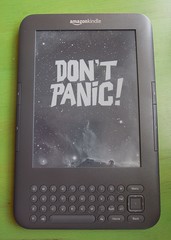
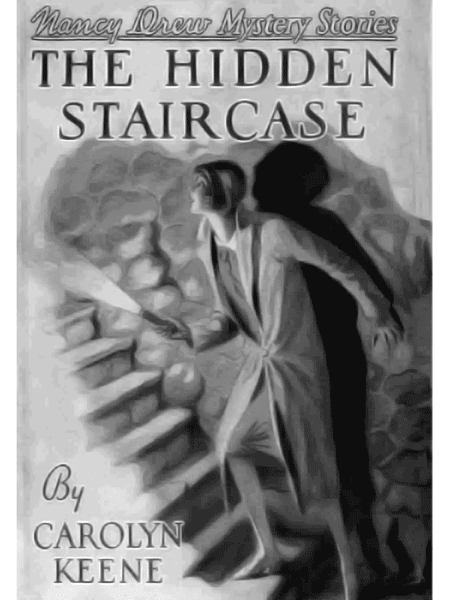
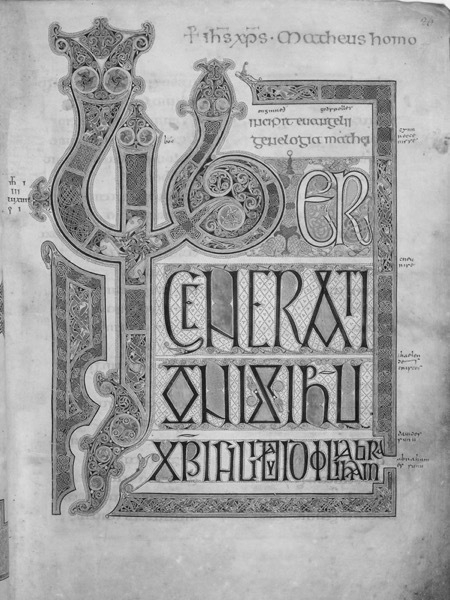
So I took matters into my own hands, did a bit of hacking on my Kindle over the weekend, and now I have a pool of about 200 attractive, varied, and unusual images I can use as screensavers on my Kindle, as the following gallery shows. Tomorrow, a post on how I did it.
As part of my research for a paper in my Organization of Information class, I looked up the SOC's tortured history, starting from 1940 till the Office of Management and Budget mandated in 2000 that all governmental departments standardize on it.
It's a remarkable picture of a vanished land and time, when life was local, rural, and everything of any value had to be made by someone, not imported from offshore. Notice how many occupations end with "makers" and "manufacturers." Notice how few of those jobs make their way to the current SOC headings. We've gained, certainly -- less tedious, back-breaking work for a majority, more prosperity, more goods available at a cheaper price -- but I can't help feeling something's been lost, too.
“Time” is related to how much information you are taking in – information stretches time. A child’s day from 9am to 3.30pm is like a 20-hour day for an adult. Children experience many new things every day and time passes slowly, but as people get older they have fewer new experiences and time is less stretched by information. So, you can “lengthen” your life by minimising routine and making sure your life is full of new active experiences – travel to new places, take on new interests, and spend more time living in the present – see Making Time by Steve Taylor .
Many people understand movement is required to get them where they wish to be, yet they hesitate to step into that movement. We understand that you hesitate because you don’t want to make a mistake, but such thinking is faulty and we will tell you why. You cannot make a mistake! It is impossible! If you have surrendered and entered into the flow, your guides and helpers will be assisting you, instantaneously, to help you get where your soul desires to go. It doesn’t matter which direction you take your first step in because the flow is self adjusting. The important thing is to take that first step, in any direction, because you cannot guide something that is not in motion, Dear Ones! Again, we love you for your mindfulness, but now is not the time for stagnation. Using surrender and flow with intention is mastery in motion, and a wondrous thing, indeed. Feel free to step into movement without fear, knowing that all movement is forward movement and will take you, without fail, to the place of highest good. ~Archangel Gabriel