Posts in "Review"

My Nova Scotia Books 3

📚 Purchased from Block Shop Books on a day-trip to Lunenberg, whose picture-postcard downtown area boasts a large number of restaurants, gift shops, and book stores.

I remember entering at the end of our day there, with the store about to close in 10 minutes. With no time to linger, I scanned for the graphic novels section and plucked out these three beauties.
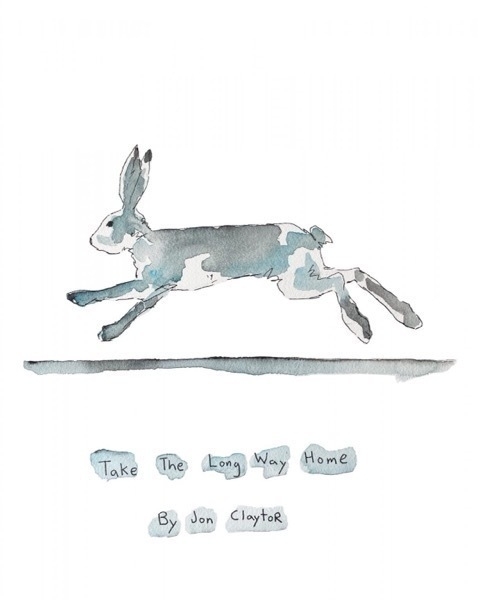
Take the Long Way Home by Jon Claytor.

I love diary comics and comics memoirs but this book bounced right off me. I remember reading this book but cannot tell you much more about it. The author takes a cross-country road trip after the collapse of a relationship while also struggling to stay sober. Along the way, he meets up with friends, children, family, talks to the animals, makes new friends, and along the way tries making friends with himself too. The drawings and some watercolors (the book is B&W and grayscale, no color) are mostly all photo-referenced with, more often than not, one big drawing to each page. The episodic, meandering nature of his journey (both external and internal), and the visually uninteresting pictures and layouts, made this big slab of a book feel rather thin. I will give it another try later; maybe I was having an off week.
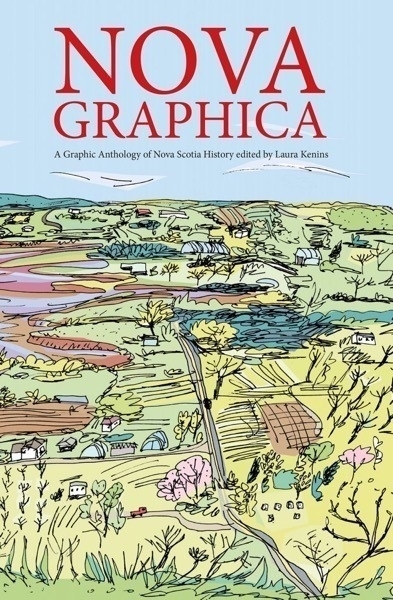
Nova Graphica: A Graphic Anthology of Nova Scotia History

A fantastic collection of short pieces on Nova Scotian history and culture, with a rich blend of personal Nova Scotian history and culture, as well. I loved seeing the variety of drawing styles, the different types of storytelling, and the panorama of topics: Black history, Indigenous history, LGBTQ, ghost stories, family stories, folklore – the gamut. For some reason, I remember the last story called “Five Sided House” by Colleen MacIsaac. It’s a fiction piece about two high school girls who take on as a school project an archeological study of the hundreds of years old foundation of what appears to be a five-sided house located in the hills above Halifax. A little Googling reveals that it’s a real historical conundrum with no clear explanation of the structure’s origin or purpose. What could have been a dry retelling of the scant facts instead becomes a lovely meditation of the past and the present, with imagination as the necessary bridge between the two.
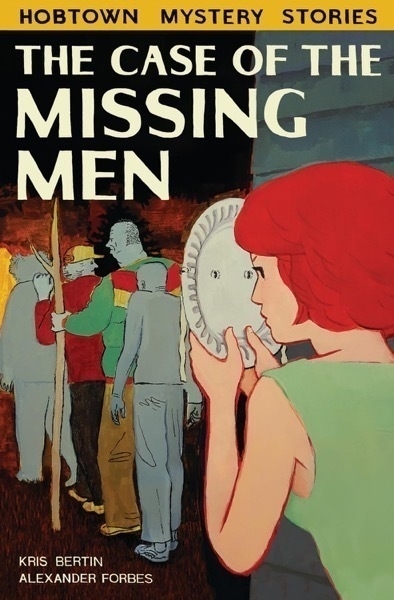
The Case of the Missing Men by Kris Bertin and Alexander Forbes.

Bertin and Forbes contributed a spooky folk tale to Nova Graphica. In The Case of the Missing Men, they give themselves 300 pages to cut loose with their own brand of local legend, noir storytelling, dark mystery, and unsettling imagery. The first of the “Hobstown Mystery Stories” series, the book follows the investigation of a high school student’s missing father by the Teen Detective Club (a registered afterschool program!). Publishers Weekly nicely summed up the book as a cross between Scooby-Doo and David Lynch, though there are few shenanigans and high-jinks; instead, there are threatening law officers, a secret society, grotesque monster-men, deaths, bodies, chases, and just what is going on behind those kennel fences? The story is odd, compelling, weird, and the exquisitely etched line drawing, detailed cross-hatching, and frankly creepy images make the whole package delightful and re-readable.

The book appears to be out of print, sadly, hence my using the Amazon link. I plan on getting myself their second novel, The Cursed Hermit, as a Christmas present to myself.


By a wonderful coincidence, all of these books were published by Conundrum Press, an independent Canadian publisher of literary graphic novels. They have an extensive catalog of works that are locally, culturally, and artistically daring. I love the range of titles and styles they offer and look forward to reading more of their books.
My Nova Scotia Books 2

Purchased from The Odd Book, a really terrific used bookstore two streets back off the main drag of Wolfville, NS. I spent a delightful couple of hours browsing the small but packed alleys of shelves. Fantastic collection of Nova Scotian history and literature. 📚

book cover

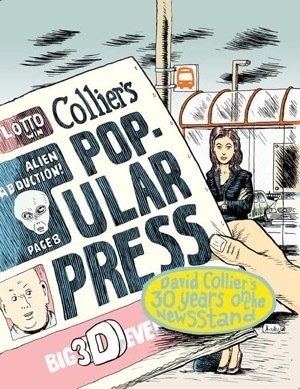
Collier’s Popular Press: David Collier’s 30 Years on the Newsstand by David Collier (2011)

A generously sized collection of the Canadian alternative cartoonist’s fugitive journalism, comics, single-panel cartoons, and sketches for all manner of Canadian newspapers. The comics journalist Jeet Heer’s introduction praises Collier’s craft and his love of homey detail, which are evident in his wonderful landscape drawings that lead off the book, his comics-based diaries, and his own written reminiscences, including a pilgrimage with Pat Moriarty to the house George Herriman lived in.

Collier’s self-portraits, line detail and cross-hatching, and stories where he casts himself as an overly self-conscious overthinking nebbish struck me as very Robert Crumb-y, but without that artist’s graphic skill, emotional intensity, and attention-grabbing sense of danger. I mean, Collier is Canadian, after all. So the collection as a whole is gentle, low-wattage, takes its time. I found his comics documentation of the passing scene, and his personal essays, to be particularly affecting.

book cover

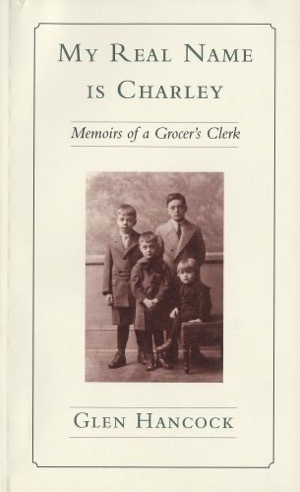
My Real Name is Charley: Memoirs of a Grocer’s Clerk by Glen Hancock

Hancock’s book is a gentle, readable memoir of growing up in Wolfville, NS, and of his life and the town’s life in the years between the world wars. He remembers the town as an enchanting place:

Wolfville is both commonplace and exclusive. It was, in common with other small Canadian municipalities, a heritage of empire, of small beginnings, of ups and downs. But as it is with people, towns have a personality of their own, a heritage that dwells in the heart, and in that way each is different.

The book follows the ups and downs also of his family, with parents who separated (he never discovers why) yet never divorced, the failure of his father’s fortunes during the Depression, and the eventual build-up to WWII. I loved reading his reminiscences of the life of Wolfville when that area of Nova Scotia was a vacation spot with twice-a-day trains, the smallest registered harbor in the world, and yet – like most of NS that time – still a largely rural, farming lifestyle.

book cover

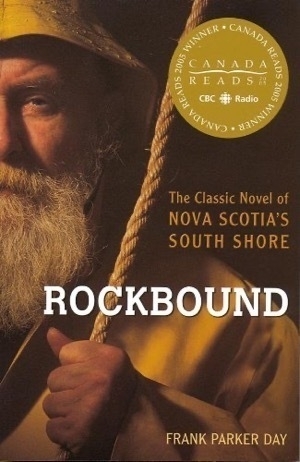
Rockbound by Frank Parker Day

I’ve used the word “gentle” for the first two books of this post, but that adjective definitely does not apply to Day’s novel, first published in 1928 and not reissued till 1973.

Blurbed as “The Classic Novel of NOVA SCOTIA’S SOUTH SHORE”, the novel follows the struggles of young, orphaned David Jung as he returns to the island of Rockbound to build a life for himself. To do that, though, he needs to work for his great-uncle, the tyrannical “king of Rockbound” Uriah Jung. The novel’s picture of the hard, primitive life of a small fishing community in the early 1900s is rich in detail; I could feel the cold, the greed, the back-breaking, skin-cracking toil needed to scratch out a bare existence from both the island and the sea.

The at times melodramatic story provides spaces where Day folds in absorbing scenes, such as a Saturday night fish-cleaning, a hurricane at sea that destroys large fishing schooners, and the protagonists’ race to get a dark lighthouse up and running to prevent disaster. It also has a day-to-day texture that, while no doubt heightened, feels plausible. According to the book’s afterward by scholar Gwendolyn Davies, Day was vilified by the inhabitants of an island called Ironbound who said he had befriended them only to gather scurrilous details for his novel that painted an untrue picture of their communities.

Rockbound’s canvas is large enough to take on one character’s possible madness and a deal with the Devil that breaks open the story to take it places it could not go by staying solely with the more naive and sensible David. The novel loses its balance occasionally; while I appreciate the maritime detail about fisherman gear and boats, I honestly understood very little of it. And in the book’s latter third, David’s friend Gershom Born pretty much takes over the narrative. The book’s voice is somewhat antique today, and others may be put off by the island dialect, though I found that to not be a problem.

In the reviews I read of the novel, no one mentioned a foreshadowing technique Day deploys a few times in the book that got my attention.

But it’s not quite foreshadowing. Three or four times in the book, Day focuses a paragraph or two on a specific minor character, and then jumps ahead a year or 30 years to show that character’s fate. Then the story steps back into the flow of the main narrative and this short interlude is never referred to again. It’s an odd device that poked my imagination somehow and extended the story in a direction that Day could not have done otherwise. (Come to think of it, the movie Y Tu Mama Tambien uses that device also.)

For example: the female characters are generally two-dimensional (as are many of the men in the large cast of characters) and Day rarely gets inside their heads. But there’s a passage in Chapter 3 that really shifted me.

The scene is the Saturday-night fish cleaning, where the day’s catchings are gutted, cleaned, and salted in preparation to sell on the mainland. It’s hard, painful, mechanical work, and all hands are expected to be in the barn to help out. Here’s where Day spends some time on Fanny:

Fanny was certainly a fine creature, but her morals were those of the birds. She came from Big Outpost to hoe Uriah's cabbages and potatoes, since the men had no time to work about gardens. Moreover, gardening was distinctly woman's work. All day long she hoed and weeded and gave a hand at night in the fish house, as did all the island women when a run of fish came. She trudged home from the fields in the late afternoon, hoe over her shoulder, whistling blithely. Before supper she always went to the beach, stripped and washed herself--little cared she if the men peeked--and put on a clean shirt and a fresh dress of blue and white in tiny checks. Her dresses, scrupulously washed and ironed, were kept in her father's sea chest in the loft by her bed. In the midst of all the dirt, stench, and disorder, she had an instinct, well-nigh a passion, for tidiness. In another setting she might have borne herself with the greatest lady in the land. She was great-hearted and could never refuse a strong fisherman half-crazed with lonely passion. When the women talked to her and said: "A little of dat's all right maybe when you'se young, but if you keeps on you'se'll never git a man," she used to reply, "We was made for de good of mens, an' mens is going to have me." If Uriah and his wife, she thought, cared so much for morals, why had they put her and Leah Levy to sleep in the loft with the sharesmen?

Sure enough, she never got a man, but she bore three daughters that grew into stout lasses, knowing no more than Fanny who were their fathers. In after years Gershom used to say, “I t’ink de pretty one wid de yaller hair mus’ be mine, but de dark ugly one favours Noble Morash.” Fanny saved her pennies and looked after herself, and when she was too old to work bought a little white cottage in Liscomb. When she was very old and felt herself at the point of death, she sent for her three daughters, but they refused to come. They had all married and were ashamed of their mother. One morning the neighbours found her dead on her clean-valanced couch, even in death smiling bravely upon a world that had taken her all and paid nothing in return.

But that is going far ahead of this story, for the Fanny who bickered with Gershom Born that night in the fish house was only a wild, gay girl of eighteen. She wore, like the others, oilskins spattered with herring blood, and a sou’wester to protect her yellow hair.

The juxtaposition of those images – of Fanny dying alone, abandoned by her daughters, against the fresh and energetic spitfire of 18 with her two little girls in tow – and that heartbreaking “a world that had taken her all and paid nothing in return” – really got to me. In some ways it got to me more than David’s story did. Whenever Fanny appeared afterward in the book, I could not shake that picture of her dying alone on her couch.

Review: Al Jaffee's Mad Life

Finished reading: Al Jaffee’s Mad Life by Mary-Lou Weisman 📚 One of the first Kindle books I got when I bought my iPad years ago, mainly so I could enjoy the color illustrations provided by Al throughout the book.

Knowing him only as a cartoonist and humorist (in addition to being the author of The Mad Book of Magic and Other Dirty Tricks, a copy of which I bought in my youthdom and display with pride), reading about his childhood is sobering. The actions of his unstable mother basically condemned her family – Al’s father, Al, and his three younger brothers – to lifelong physical, emotional, and financial traumas.

What shines through the sad stories is Al’s spark of playfulness and humor that enabled him to win over and make friends wherever he happened to land, and to make a game or playground of his sometimes terrible circumstances.

I was reminded a bit of the documentary on Robert Crumb, how he and his brothers grew up in unstable and violent circumstances to become unstable and fragile adults. Yet for Al, as for R. Crumb, art and success – no matter how small – saw him through and enabled him to survive.

Poirot 3

In what has unexpectedly turned into a quest, I’m watching the David Suchet Poirot series via Britbox on Amazon Prime Video.

Because the short stories are too short, or the novels too long, they are often significantly reworked to fit into the Procrustean bed of 51-minute episodes. Particularly in the early years, there’s also a desire to establish a family of established characters: Poirot, Miss Lemon, Hastings, and Japp. So the supporting cast often feature in their own B or C storylines to pad out an episode to 54 minutes.

Example: An early series episode, “The Chocolate Box,” where Japp and Poirot travel to Belgium for Japp to receive an award, and Poirot relates an early case from when he was a policeman. In the original story, Poirot simply retells the case to Hastings. In the TV episode, the expanded world created by the producers offers scope for great scenery, and enlarges both Japp and Poirot’s inner and outer lives, and their respect and affection for each other. Christie never imagined such character-defining moments because such moments were never really her concern.

The TV shows often significantly change the stories, and not only by adding B and C storylines that don’t exist. Again, in “Chocolate Box,” the short story features the murderer correcting Poirot’s deductions by confessing, and the young woman Virginie leaves to join a convent. But in the TV episode, Poirot correctly deduces the murderer, he secretly loved Virginie, and she marries his best friend.

Events planted in the early years – Hastings’ marriage and his move to the Argentine to be a rancher, Poirot’s first retirement – return and are played up or played down as needed in later years. While these threads don’t always work, they provide a sense of a continuing story despite several years’ gaps between series.

So, the three periods of TV-Poirot.

“The Cozies”

The early seasons of single-episode “cozies” that established the theme music and style aesthetics. The production qualities are at a comfortable and uniform level: Art Deco-inspired sets, impeccable costuming and set designs, and a generally high to medium-high quality of acting. It’s also great fun to see young actors starting out, like Christopher Eccleston and Jeremy Northam.

The stories look as if they take place on a grand stage, with Poirot the most dandified character on set, and very much belonging to this world. The direction is four-square and conventional, though the opening scenes sometimes show a dark playfulness and imagination (i.e., the opening of “One Two, Buckle My Shoe”).

I’m assured of a dependable and cozy, if unexciting, standard of viewing pleasure. For that reason, I only rewatched episodes I remembered favorably, or hunted for particularly interesting stories from the first 5-6 years.

“Why Are We Here?”

The middle period, beginning roughly with “The Murder of Roger Ackroyd” is deeply uneven. Only the opening bars of the Poirot theme, and a few seconds of the original credits are used; so a rethink of the stories’ presentation is taking place, but the choices don’t go deep.

The TV family appears now and then, the sets and costuming don’t look as good, the direction is even more boring, and the acting ranges from OK to embarrassing. The drop in overall quality from the early years is rather shocking.

“Roger Ackroyd” seems to mark the beginning of something new, with Poirot’s silhouette in the framing credits promising a more interesting visual style. Given the source novel, a little more imagination is needed to tell the story and they pull it off, even if Japp is brought in by the scruff of the neck. The framing is clever, but the story is told unremarkably.

However unfair the comparison between this period’s “Evil Under the Sun” to the Ustinov movie, the comparison highlights this period’s deficiencies in setting, acting, and direction from its previous dependable standard. (“Murder in Mesopotamia”? “Lord Edgeware”? Tres crap, especially the acting, which is usually one of the most dependable aspects of British TV.)

“Ah, This is Why We’re Here”

I’ve now entered what I think of as the last period, as exemplified by “Murder on the Orient Express,” which I saw out of order before my rewatch. This period, overseen by new producers, is a breathtaking and daring revision of the Poirot world from Period 1, and not only visually. Especially so as compared to Period 2, which left no clue that such a vast boost in quality, atmosphere, and storytelling – an older, darker, richer vision – was possible for the series.

Seeing Poirot in what is recognizably a more naturalistic world, he now stands out as less a stage dandy, and more a weird creature, a deep eccentric clothed in the fashions and morals of a different time and place. This tension provides a meatier subtext for Suchet. His Poirot, ever the outsider, is assaulted more by the modern world, its noise, its ill manners, its neverending brutal violence and stupidity, and its inability to take responsibility for the consequences of its actions.

Example: “Five Little Pigs” (gah, a terrible title; the original title “Murder in Retrospect” is a little better but not much). Time is taken to establish the characters, the direction and script are breathtakingly modern despite having to hew to the genre tropes, and best of all is the acting: total commitment from all the players, which makes the interviews – potentially the dullest part of the story – absolutely riveting.

The next story, “Sad Cypress,” is also long on mood, with again excellent acting and an involving denoument; I watched this twice just to make sure I saw everything I missed on the first watch. What turned my head here was a dream in which Poirot sees the victim’s face bulge, reshape, and transform itself into another face before peeling back to show a skull. I jumped in my chair almost as violently as Poirot did in his bed. It was a bold and wonderful way of giving Poirot a clue (i rewatched that bit three times because I couldn’t quite believe it, but even so, I could see the face horrifically reshape itself into that of the victim’s mother).

And “Death on the Nile,” while not as luxurious as the Ustinov version, is also remarkably good and atmospheric.

I’m really enjoying this series.

Poirot 2

Follow-up to my 2023-01-29 diary post on Hercule Poirot.

From reading Poirot’s Wikipedia page, I discovered that the stories do document that he is Catholic, and a few nods are made to it in a few of the episodes in the early years.

I was also pleased, on watching David Suchet’s “Being Poirot” that he also highlighted the end of the Murder on the Orient Express, which I found so moving.

I’ve been icing my ankle in the evenings after Liz goes to bed, so I’ve taken the opportunity to catch up on the Poirot episodes via Britbox. I’m not watching them all, but there are a few – “Chocolate Box” is one – that are nicely done, even if they destroy certain elements of the original story. I’m surprised at how many of these old episodes I remember from their first runs.

Seeing them in a batch like this, Christie’s devices become noticeable: an older character is revealed to be the unknown parent of a younger character, the murder always happens earlier than the timeline suggests.

It is fun to see the bits of business inserted for the actors to do to flesh out their characters. My favorite bit: Hastings is washing dishes, Poirot is drying them. As they speculate about the case, Hastings absent-mindedly hands over a washed saucer to Poirot, who examines it, and passes it back to Hastings for further cleaning. The same saucer is washed and passed back through the entire scene and this absolutely delighted me.

It’s also fun to see young actors like Christopher Eccleston and Damien Lewis in their very young and slim incarnations.

I’m working my way through the seasons, watching the few stories that really interest me, and then finishing with Curtain, which I’ve never read nor seen.

Booknotes: Christmas Stories by Lucy Maud Montgomery

Finished reading Christmas Stories by Lucy Maud Montgomery 📚

A light-hearted book of stories from the early 1900s by the author of Anne of Green Gables. One of the stories is an excerpt from the novel, but the rest are all stories of children, or young families, or young woman on their own. Hard hearts are softened, family strife is healed, there are no villains, everyone is kind to each other in the end. They are good old-fashioned well-made stories, very sweet and a little melodramatic, done with lightness and humor.

The stories typically turn on coincidence or mistaken identity or God throwing a wrench into someone’s plans that turns out to be just the wrench that someone needed to see that God knew what He was doing all along.

I read these via Serial Reader, which was probably the best way to read them. They each take only 10 or 12 minutes to read, perfect for these dark evenings leading up to Christmas night.

Booknotes: Life Admin by Elizabeth Emens

Finished reading: Life Admin: How I Learned to Do Less, Do Better, and Live More by Elizabeth Emens 📚

Another of those books that could have been served by a long article–but my obsession with producivity and organization colors my view. And maybe I was reading for the wrong reason.

My friend Bob, another productivity nerd, after one of our discussions of how we organize our software and physical environments to remember the myriad stuff we have to do, once asked, “How do normal people do it?” Life Admin is a book for the normal people who have never heard of and don’t care about GTD or Pomodoros or Bullet Journals. It’s a book for people like the author: an overworked, overbusy, single working mom who faces a world of administrivia and wonders, “How do people do it?”

Emens’ chief innovation, for me, was really separating the idea of “admin” as a concept and type of work all on its own, from the tasks that it supports. Grocery shopping is a task; figuring out what the meals will be this week and creating the grocery list is admin. Admin is the work around the work.

For instance, she breaks household projects down into three key parts: “planning/research, decision-making, and execution.” She writes:

If you want to share a project, decide who does each part. For instance, one person can do the front-end research, and the other can do the back-end implementation. You can make the decisions together or make one person the decider.

This example illustrates one of the key differences of Emens’ book from typical productivity tomes. The latter are focused on how the individual can organize and optimize their environment. But Life Admin focuses on how people deal with admin while in relationship to other people, and how some partners–no matter how they feel about admin–bear the burden of domestic admin, child care admin, meals admin, etc. These are mainly women in heterosexual unions, but even in gay or polyamory relationships, Emens makes the point there is typically one person who does the admin. Somehow making that admin visible–or seen as relevant–to partners who deny or simply don’t care about the importance of admin, is also a key theme of the book.

Really thinking about all the jobs and projects one has to do systematically, like a project manager, breaking a project down to its component parts, is a skill that can be learned. But as Emens discovers in her surveys and focus groups, and in her own life, people vary in their emotional reactions to the idea of admin, from dread to denial to grim stocism to not-a-big-deal to actual enjoyment.

I resonated with Emens point about how admin can be “sticky”: whoever does a particular admin chore first is often stuck with the job whether they like it or not, whether it’s dealing with the landlord or planning the kids’ play dates. In my own life, Liz did all the admin related to the utility bills because they were in her name when I moved in with her.

The book has helped me see the admin in my life–and who does it–differently. So while I can’t say it was a great book (I skimmed and skipped whole sections of it), I can say it was a very useful book and it has affected how I think about and approach the work I–and others–do.

William Preston's The Old Man stories

I spent most of the pandemic reading comics. For whatever reasons, my mind and mood preferred the comics medium during those years. They held my short and distracted attention span in a way “real” books did not.

I figured I’d return to reading fiction whenever it was time for me to do so. A biography of Arnold Bennett got me back to reading long-form prose via Kindle. Then I rummaged through my Kindle Oasis to re-read some fiction, as I have found that re-reading helps stoke the reading habit. And I found just the medicine I needed.

It was through a review in Steve Donoghue’s column on the old Open Letters Monthly site that I heard about the “The Old Man” stories by William Preston. As Donoghue explains, the stories are a homage to the pulp-age hero Doc Savage, whose reprinted adventures I read in junior high school. I was deep into comics and the pulps at that age, and even read Philip Jose Farmer’s Doc Savage: An Apocalyptic Life, a fictional biography of a fictional character, although I had no idea what “apocalyptic” meant. I’ve not read any Doc Savage books since then, but that character is deep inside my readerly DNA.

The “Old Man” is Preston’s Doc Savage figure, although he is not officially named in the stories. Preston’s device—used throughout the series—is to tell the story through a character close to or on the periphery of The Old Man. The reader is never privy to the Old Man’s thoughts; instead, the narrator observes the Old Man and describes his actions. The evocation of past times, and of a shadowy otherworld whose events affect our world, suffuse the stories like smoke.

Preston’s prose is as steady, measured, and even-handed as his protagonists. This deliberate pace affects the action in the stories to the point where the pulse never quickens with thrills, as I think he intends them to. What the prose lacks in action, it more than offsets by evoking darker, layered, richer flavors of regret, melancholy, wonder, and mystery. These stories stand up to multiple re-readings.

Preston also takes a leaf from the revisionist superhero comics of the last 20 years by bringing this pulp-era action figure into a world toppled over by 9/11. How would such a shadowy figure of myth operate in a world of constant surveillance where anyone can be locked up as a potential threat? It opens new themes for exploration in the stories, and Preston tackles them head-on.

Preston has so far written four intertwined stories (he’s been writing the fifth—and he says final—story for years) and he recommends they be read in the order they were published:

  • “Helping Them Take the Old Man Down”—The first Old Man story and for me, the most memorable, as it marvelously hints at other untold stories and untold adventures. It juxtaposes that long-ago world of pulp with the modern world of surveillance and suspicion. A beautiful setup for the stories to come
  • “Clockworks”—Set during the heyday of the Old Man’s adventuring, it wrestles with a disturbing trope from the Doc Savage stories in which Doc surgically altered his enemies’ brains to make them good citizens. The climax of this story I found very hard to visualize and follow.
  • “Unearthed”—Set during the Old Man’s youth as he is starting out on his mission. Another story where I had difficulty visualizing the geography and landscape of the action sequences. But again, the pleasures of the prose and characterizations are stellar, and also the way it re-architects the series in a way that made me re-read the first story again.
  • “Each in His Prison, Thinking of the Key”—the longest story and the most interior, where the protagonist broods on what he’s seen and done, and what he would prefer to see and do. Donoghue describes the story in his review so I won’t recap it here.

The Old Man stories are available as cheap cheap cheap ebooks on Preston’s Amazon Authors page.

Preston’s writing was done in the odd corners of his working day as a high-school English teacher. His personal blog had great notes and mini-reviews of the books and stories he was reading, but he has not updated it since 2017.

Surviving the Ordinary: Why We Need Memoirs of Regular Lives | Literary Hub

So why do we need this book?

Mary Laura Philpott’s article looks at books of the ordinary lives that most of us lead: birth (or not), love (or not), marriage (or not), and death (oh yes). As much as the sensational books grab our attention, it’s the quieter books about quieter lives that can speak more loudly to us.

I have read to Liz before her bedtime for many years, and we’ve found that the best books for that are memoirs of ordinary people, but with a twist of some kind.

  • Eugene Walter was certainly not ordinary, but his memoir Milking the Moon is a delight all the way through
  • Cornelia Bailey’s memoir of life on Georgia’s Sapelo Island took me to a time and place not that far away from me, but it depicted a different world.
  • Betty MacDonald of The Egg and I fame also wrote a harrowing yet terrifically funny memoir of her year in a Seattle tuberculosis sanatorium in the ’30s, called The Plague and I. Every page is a gem.
  • Roz Chast’s graphic novel memoir of her aging parents’ decline, Can’t We Talk About Something More Pleasant, captures the poignance with a crooked smile and Chast’s knack for the telling detail.
  • We’re now reading The Bridge Ladies, a memoir by a woman who joined her mother’s bridge club and sees another side to the generation of women she went to college and the big city to escape.

Philpott worries for her own book of memoirish essays and whether its normality will speak to readers. Her hope for why readers may find it of interest rests on the concept of “relatability.”

People come in all the time seeking not just an entertaining read, but (sorry, here comes that word) a relatable one. They pull down books in which they find some version of themselves as they are now or were in the past or hope to be one day. They start out seeing themselves in others; then they see the other in themselves; then they’re able to see themselves and their own futures differently. I’d say these books transform people, but it’s more that the books help people along while they are already transforming.

Perhaps. I would say instead that way down deep, in a place before words are formed, we know that we are all connected, we are all One Self. A good ordinary memoir cracks open the door to that place and reminds us of that truth.

Updated 2026-01-09

Eight Books, Audiobooks, Comics

Encounters With an Enlightened Man by Linda Quiring. Of the three books written by Quiring about Sydney Banks, this is probably the best. It misses the freshness of the first two books, which were written in the early 1970s when Banks started sharing his enlightenment experience, but it tells a beginning-middle-end story and paints a more complete picture of the place and time. Of interest mainly to people interested in the history of the Three Principles and Banks’ personal history. I am drafting a bigger post that takes a look at all three books.

Silver Screen Fiend: Learning About Life from an Addiction to Film by Patton Oswalt, read by Patton Oswalt. A memoir by Oswalt of the movies he compulsively watched during his first years in Los Angeles. It’s a story of being in the grip of a mild obsession well-known to those of us with a geeky/nerdy bent. His girlfriend at the time asks him to walk her out to her car from the theatre, and his first, absolutely natural, response is, “But I’ve never seen the start of the next movie and I don’t want to miss it.” Exit one relationship.

Parallel with his obsession is the evolution of his standup, writing, and acting career and how he tries to juggle that with the nightly movies shown at the New Beverly. The most chilling and haunting story to me is of a long-ago standup comrade who imposes on Oswalt for a shot at becoming a star; Oswalt has already become a character of fiction in someone else’s movie. He introduces and returns to the idea of special, sometimes dark, moments that propel one forward in life or work. He wrote this before the death of his first wife, so listening to those passages struck me as especially poignant.

The Correspondence by JD Daniels. A collection of laconic essays and two short stories that originally appeared in The Paris Review. Here’s a passage from a short story:

She’d gone to school for years to study library science. He didn’t see how it could be so complicated. It seemed like a hoax.

All the essays and both stories have that terse, dry flavor; the humor is almost an aftertaste. A rather short book, too – I read one essay or story a night in about 30 mins or so.

Jacob T. Marley by R. William Bennett, read by Simon Vance. Bennett finds a loophole in Dickens’ story to spin a tale with 19th-century flavors, coincidences, and voices. It’s a clever reworking of the original material that exploits unexplored nooks and crannies, though he does get a bit bogged down as the spirits explain the metaphysical mechanics of the afterlife and what is required for Scrooge’s reclamation. Though, if I heard the story right, it’s Marley’s sacrifice that redeems Scrooge rather than Scrooge’s own change of heart. If so, that makes Dickens’ story subservient to Bennett’s, which does not sit well with me.

Breakfast at Tiffany’s by Truman Capote, read by Michael C. Hall. I had never seen the movie nor read the book so this was new to me. It is very much a book of the 1950s – rather gray and naturalistic, the secondary characters all stagey and one-note – except when Holly explodes into the narrative with unnatural color and life. Holly is clearly the most interesting character and the mysteries surrounding her are the ones I cared about the most. Hall’s reading was fine though I didn’t care for his expression of Holly’s voice. For further reading: an excellent Open Letters Monthly essay compares and contrasts Sally Bowles and Holly Golightly.

Just Keep Going by Jeanette Stokes. Disclaimer: Jeannette is an acquaintance we run into at random cultural events here in Durham. The book is part of her ongoing memoir series; this one focuses on how her relationship to writing, art, and creativity marked key passages of her life. A compact memoir with a good collection of basic advice and resources for the new writer and timely reminders for the experienced one.

Tales of the Batman: Alan Brennert (Comixology). Archie Goodwin had a long career in the comics industry and was a much beloved writer, editor, and mentor. His Batman stories in this volume span the years 1973-2000. They tend to the pulpy and the “well-made.” He also seemed interested in expanding the canvas on which Batman stories could be told; many of the stories delve into character histories and motivations – with lots of exposition – making Batman almost a secondary character.

They’re good meat-and-potatoes Batman stories that color in unnoticed areas of Batman’s universe (who did design the Batarang and Batmobile?). The highlights for me are the six or so Manhunter stories that ran as backup to the main Batman series and that I still remembered from when I was a kid; so glad they’ve been collected at last. Goodwin’s updating of the 1940’s Manhunter character to the cynical modern-day prefigures work that Alan Moore would take to another level a decade or so later. It’s Walt Simonson’s artwork that made these stories instant minor classics.

Alan Brennert has been a successful writer in many media: stories, novels, TV, even the book for a Broadway musical. He only wrote nine stories for DC, his first in 1981 and his last in 2000. Yet they include some of the most interesting takes on the Batman mythos, mixing the pleasure of nostalgia with the character development he used in his scripts and novels. For me, his stories pay the best dividends every time I re-read them. I remember buying these comics back in the day and noticed even then how different his stories were, how he pulled out details or emotional colors that I did not see elsewhere.

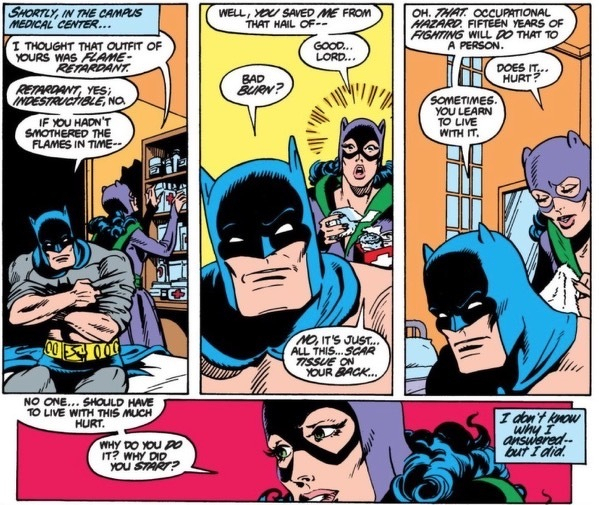
Scar tissue.

Brennert had a particular fondness (as do I) for the “golden age” or “Earth-2” Batman and my favorite story of his – maybe one of my favorites of all time – is the Earth-2 Batman teaming with Catwoman to hunt down the nefarious Scarecrow (“The Autobiography of Bruce Wayne”). Joe Staton and George Freeman drew the chunky Batman from the ’50s, a style that instantly evokes the light-hearted adventures of that era. But Brennert adds a moment that stops that feeling dead in its tracks.

Batman removes his shirt so Catwoman can attend to his wounds. She gasps at the scar tissue covering his back; it’s key that we see only her horrified reaction and Batman’s stoic response. That scar-tissue detail is so unexpected in the context of a “retro” Batman story, yet such a common-sense detail considering his life of fighting, that I am still amazed Brennert was the first to conceive of and use it. It’s a telling detail that’s now accepted as a given and enshrined in the movies.

Brennert had that freedom of approach – perhaps from his work in other media – to give his characters time to breathe amid the action and feel the weight of emotional moments. That’s not something you see in comics very much, and it’s always appreciated when it happens.

Updated on 2026-01-30